Beyond Components: Why Integrated Systems Engineering Is Changing Fluid Power Design
Produced with support from HYDAC
This show takeover was sponsored by our iVT Expo USA 2026 coverage partner, HYDAC. See more coverage on our iVT Expo USA 2026 page.
Key Highlights
- Fluid power engineering is transitioning from a component-focused methodology to system-wide optimization in order to meet modern technological demands.
- Utilizing an integrated systems engineering approach considers the entire machine earlier in the design process, helping to minimize potential performance issues later on.
- Early collaboration among hydraulic, electrical, software, and control engineers brings opportunities to improve validation and performance that may not be possible within a single engineering discipline.
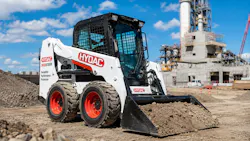
For decades, fluid power engineering has been driven by component expertise. Engineers selected pumps, valves, cylinders, filtration systems, accumulators, and controls based on performance requirements, integrating these elements into machines that met increasingly demanding operating conditions. This component-focused methodology has served the industry well, contributing to generations of reliable and productive equipment.
Today's machines, however, present a fundamentally different engineering challenge.
Construction equipment is becoming increasingly automated. Agricultural machinery incorporates advanced guidance systems and precision controls. Industrial equipment is expected to deliver higher productivity while consuming less energy. Mobile machines must comply with increasingly complex functional safety requirements while simultaneously supporting remote diagnostics, predictive maintenance, and software updates.
These expectations have changed more than machine capabilities — they have changed how engineers must approach system design.
Success is no longer determined solely by how well individual hydraulic components perform. Instead, it depends on how hydraulics, electronics, controls, software, sensors, and mechanical systems work together as a complete machine.
The engineering focus is shifting from optimizing components to optimizing system behavior.
Machines and Their Fluid Power Systems are Growing More Complex
Fluid power has always been multidisciplinary. Hydraulic circuits have long depended on mechanical design, power transmission, and operator interaction. What has changed is the number of technologies that now influence machine performance.
A modern off-highway machine may include:
- electrohydraulic control systems
- electronic sensors
- CANbus communications
- embedded software
- electric actuators
- functional safety architecture
- human-machine interfaces
- cloud-based diagnostics
- machine automation.
Each subsystem performs an important role. However, no subsystem operates independently.
A change in hydraulic response may require modifications to control software. Sensor placement can influence machine stability. Filtration affects component life, which influences maintenance intervals and system availability. Software tuning may improve productivity while simultaneously affecting energy consumption or operator feel.
The interactions between systems have become just as important as the systems themselves.

Why Component Optimization Is No Longer Enough
Engineers have traditionally approached machine development by optimizing individual systems.
Hydraulic circuits were designed for required flow and pressure. Control systems were tuned separately. Electrical systems were developed independently. Software was often integrated later in the design process.
Each discipline successfully achieved its own objectives.
Yet machines occasionally exhibited behaviors that were difficult to explain:
- excessive heat generation
- pressure spikes
- slow response
- oscillation
- reduced fuel efficiency
- inconsistent operator feel
- premature component wear
- challenging commissioning.
These issues were not the result of poor component selection. They were results of interactions between multiple engineering disciplines.
Optimizing one subsystem sometimes introduces unintended consequences elsewhere.
The result is an engineering reality that many OEMs now recognize: A collection of optimized components does not necessarily produce an optimized machine.

Systems Thinking Must Begin Earlier in the Design Process
Integrated systems engineering shifts engineering attention to the entire machine much earlier in the development process.
Rather than beginning with individual components, engineers begin with questions such as:
- How should the machine behave?
- What performance characteristics are most important?
- Where are the efficiency losses likely to occur?
- How will operators interact with the equipment?
- What maintenance requirements should be anticipated?
- How will software influence hydraulic performance?
These questions encourage engineering teams to consider relationships rather than isolated functions.
Hydraulic design, controls engineering, electronics, software development, and application engineering become collaborative disciplines rather than sequential activities.
The result is often fewer late-stage design changes, shorter commissioning periods, and improved overall machine performance.
Engineering for Machine Behavior is Now the Primary Focus
One useful way to describe this evolution is that engineers are increasingly designing machine behavior rather than hydraulic circuits alone.
Machine behavior includes characteristics such as:
- response time
- precision
- stability
- energy efficiency
- heat management
- safety performance
- reliability
- serviceability
- operator experience.
Hydraulics remain central to achieving these objectives, but they operate within a larger system that includes sensing, control, software, and diagnostics.
This perspective encourages engineers to evaluate how decisions made within one discipline affect the performance of another.
Collaboration Between Engineering Teams is Becoming a Competitive Advantage
Perhaps the greatest change in how machines are engineered is organizational rather than technological.
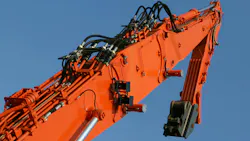
Machine development increasingly requires collaboration among hydraulic engineers, controls specialists, software developers, application engineers, electrical designers, and OEM design teams.
Rather than working independently until integration begins, these disciplines contribute throughout the design process.
This collaborative model helps identify design conflicts earlier, improves validation, and creates opportunities for performance improvements that may not be visible within a single engineering discipline.
As machine complexity continues to increase, collaboration itself becomes an engineering tool.
Looking Ahead: Fluid Power Engineering Will Require a Systems Approach to Meet Requirements of Emerging Technologies
The fluid power industry is entering an era where system integration will become a defining engineering competency.
Emerging technologies — including electrification, autonomous operation, digital hydraulics, advanced sensing, predictive maintenance, and functional safety — are increasing the number of interactions engineers must manage.
None of these developments diminish the importance of hydraulic engineering. Instead, they elevate its role within a broader engineering ecosystem.
Fluid power will continue to provide the force, precision, and durability that modern machines require. The difference is that these capabilities will increasingly be evaluated in the context of complete system performance rather than individual component specifications.
For engineers, this represents an opportunity.
By embracing systems thinking and fostering collaboration across disciplines, they can create machines that are not only more efficient and reliable, but also better prepared for the demands of increasingly connected, intelligent, and automated equipment.
Ultimately, the future of fluid power will be defined not simply by better components, but by better integration.
This article was written and contributed by Chris Kolbe, Senior Vice President of Sales & Marketing at HYDAC.
About the Author
Chris Kolbe
Senior Vice President of Sales & Marketing, HYDAC
Chris Kolbe is an accomplished sales and marketing leader with extensive experience in fluid power, mobile equipment and industrial technology. At HYDAC, he combines a strong technical background with a solutions-driven approach to helping customers address complex engineering and market challenges. A graduate of the Milwaukee School of Engineering with a Technical MBA and a certified Fluid Power Specialist, Kolbe has held leadership roles spanning sales, marketing, product management and business development. He is also an active member of several industry organizations, including the Association of Equipment Manufacturers (AEM) and the National Fluid Power Association (NFPA).