Evolving Mobile Equipment Designs Prompting a Convergence of Hydraulics and Electronics

Representatives from the hydraulics industry offer their insights on how evolving mobile off-highway equipment design priorities are requiring an increased convergence of hydraulics and electronics.

Produced with support from HYDAC

This show takeover was sponsored by our iVT Expo USA 2026 coverage partner, HYDAC. See more coverage on our iVT Expo USA 2026 page.


Key Highlights

  • Corey Quinnell from Husco, Russ Schneidewind from HydraForce, and Luka Korzeniowski from Leggett & Platt Hydraulics share their perspectives on the trends shaping off-highway equipment designs and how those are influencing developments in the hydraulics industry.
  • Automation, improved uptime, increased motion control capabilities, and ease of use are among the key design drivers shaping off-highway equipment designs and the hydraulic systems utilized in them.
  • To achieve these design priorities, it is becoming increasingly important to pair electronics with hydraulic components and systems.

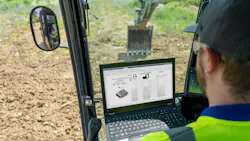
There are a number of industry trends driving the design of today’s mobile off-highway equipment, all of which have the same goal — improve productivity and ease of operation for machine owners.

Russ Schneidewind, Director of Business Development at HydraForce

The off-highway mobile equipment industry is undergoing a substantial change as OEMs prioritize maximizing machine uptime and availability over incremental feature upgrades. In response, hydraulic technology is transforming into highly optimized, intelligent systems designed to keep machines working continuously on the job site.

To minimize downtime, modern hydraulic systems must optimize energy usage regardless of the power source. Greater hydraulic efficiency translates directly into increased machine uptime, leaving less time wasted refueling or recharging.

Simultaneously, advanced hydraulic controls help address the industry’s skilled labor shortage. Intuitive controls allow less-experienced workers to operate complex equipment safely and productively, maintaining high machine availability.

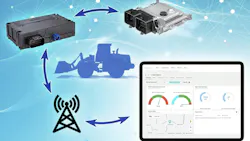
Finally, real-time machine health data gathered through telematics allows operators to transition from reactive troubleshooting to proactive care. By predicting potential failures, operators can schedule maintenance during planned downtime rather than responding to expensive breakdowns on the job. To support this, hydraulic systems require embedded smart sensors that continuously monitor performance metrics and alert operators before a function fails.

Luka Korzeniowski, Director Product Development, Leggett & Platt Hydraulics

As a manufacturer of hydraulic cylinders, we have seen a continuing trend of increased cylinder functionality in the off-highway mobile equipment industry. Whether adding valving for cushioning, or hose leak safety valves, or embedding proportional controls within a cylinder, customers are always asking for a "smarter" cylinder.

For many years, the industry has desired increased motion control. From simple assistive functions to fully autonomous operation, various sensors are needed to provide real time information to enable increased levels of this control. Many manufacturers have adopted cylinder position sensing as one element of the closed loop control. Incumbent technology has performed well, but there is still room for improvement. 

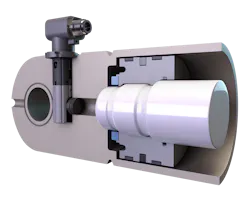
Simplified installation and the ability to service the cylinder position sensor has driven Leggett & Platt Hydraulics to invest in a new sensor product, the Integrated Radar Measurement Sensor (IRM). Along with providing position information, the IRM Sensor also utilizes CANbus communication which allows for communication of other information - such as velocity, direction, temperature, and status updates. This type of information supports motion control, preventative and predictive maintenance.

About the Author

Sara Jensen

Executive Editor, Power & Motion

Sara Jensen is executive editor of Power & Motion, directing expanded coverage into the modern fluid power space, as well as mechatronic and smart technologies. She has over 15 years of publishing experience. Prior to Power & Motion she spent 11 years with a trade publication for engineers of heavy-duty equipment, the last 3 of which were as the editor and brand lead. Over the course of her time in the B2B industry, Sara has gained an extensive knowledge of various heavy-duty equipment industries — including construction, agriculture, mining and on-road trucks —along with the systems and market trends which impact them such as fluid power and electronic motion control technologies. 

You can follow Sara and Power & Motion via the following social media handles:

X (formerly Twitter): @TechnlgyEditor and @PowerMotionTech

LinkedIn: @SaraJensen and @Power&Motion

Facebook: @PowerMotionTech