Industrial Automation Requires Faster and Easier to Use Solutions
Key Highlights
- Industry experts from Bosch Rexroth offer their perspectives on how components and systems are adapting to meet the evolving requirements of industrial automation solutions.
- Requests for automation solutions capable of operating at faster speeds to meet increased productivity requirements as well as those that are easy to implement and use are on the rise.
- Cost, lead times, return on investment and new product development are some of the challenges that continue to face the industrial automation market.
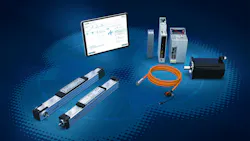
The need for smarter, faster and more productive industrial automation solutions is placing new performance requirements on the fluid power and electromechanical technologies used in automation systems. As such, it is prompting new developments from hydraulic, pneumatic and electric motion technology suppliers.
Additionally, there is a need to make automation solutions easier to implement and use which is driving further technological developments.
Read “Automation Remains an Investment Priority for Industrial Applications” for the first part of my interview with Vaughn, Ocampo and LeAnna during which we discuss the continued uptake of automation and the trends shaping the industry.
Or check out the video versions of my interview with Vaughn, Ocampo and LeAnna:
Industrial Automation: Current Opportunities and Challenges
Automate 2026: Electrification, Humanoid Robots and AI to be Key Trends of Interest
In this second part of my interview with industry experts from three different divisions of Bosch Rexroth, we talk about the evolving technological needs of the industrial automation industry.
Richard Vaughn, Head of Product Management – Linear Technologies; Joaquin Ocampo, Product Manager – Automation & Electrification; and Bill LeAnna, Sales Product Manager – Transfer Systems, each provide their perspectives on the technologies they see being used, the capabilities customers are desiring as well as the challenges yet to overcome.
*Editor’s note: Questions and responses have been edited for clarity.
Power & Motion: When it comes to the technologies employed in automation, is Bosch Rexroth seeing hydraulics being used for industrial automation systems, or is there a greater use of electric actuation technologies in today’s systems? Or are both technologies used fairly equally?
Joaquin Ocampo: [On the drives and motors side], a lot of the hydraulics is being done as power when you need it. We have our Sytronix system that uses frequency drives; when power is requested, the units run. The advantage of this is that it makes the machine quieter and more energy efficient. This is one of the big pluses of having dual technology in factory automation. We showed this technology to one of our customers, and when he went up to the machine he asked if it was on because he didn’t hear noise from the hydraulics. We told him it was on and he was amazed. Something like noise reduction can make a great impact in the plant.
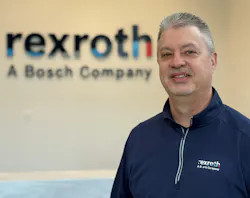
So yes, where it’s available to have hydraulics [we still have it] because of the power density [hydraulics provides]. But of course the EPA (U.S. Environmental Protection Agency) is also pushing [companies to be] more energy efficient and kind to the environment. We’re starting to put in electrical [to achieve that] but overall I’d say it’s still about 50/50 [hydraulics and electric].
Richard Vaughn: On the linear side, we've definitely seen the trend [toward] electromechanical. But hydraulics are not going away. In certain environments, they don't want oil or the [cost of] having air and then there's a drive to the electromechanical.
For suppliers like us, it's actually caused us to take a deeper look and develop larger sizes of electromechanical cylinders that typically were not in the market. For these cylinders there is an ISO footprint [they are designed to], so you can swap in a pneumatic, hydraulic or electromechanical cylinder; you've got all of the options, but pending the environment that they're going into, that's a big driver sometimes [for which option is used] and we continue seeing that trend.
Bill LeAnna: I agree, hydraulics will never go away. Hydraulics is always going to be used in large applications, large pressing applications and so forth. But in production lines, we don't see a lot of hydraulics being used. In fact, the call for servo driven electromechanical cylinders is really what we're seeing. These cylinders have an impressive amount of force that they can apply that's very similar to a hydraulic cylinder. And folks are also looking for more localized, cost-effective, low-energy solutions, and that's what the electromechanical cylinder brings.
Power & Motion: What are the features or capabilities customers are currently looking for in automation solutions?

Bill LeAnna: What we're seeing is a quick push towards fully electric production lines. We talked about hydraulics and pneumatics, but the push is for fully electric. Pneumatics is one of the most expensive mediums to use, and so customers are looking to get away from that. And so we're scrambling to come up with some new designs for our components that are currently only pneumatic. That's a big push.
The other thing that we're seeing is requests for higher speeds. Everyone wants their production lines to move faster, but in a controlled environment, right? So it's difficult when you start moving faster and your loads get higher and higher, because then you have safety concerns and so forth.
In addition to that, they're looking for extreme accuracy and repeatability. So with that, they're actually asking for more linear motor types of controlled production lines, and we're seeing the call for that many times a week. The industry is also calling for heavier load handling. The loads are getting larger and heavier. So in addition to all-electric, the higher speeds, the accuracy, we have to handle the [heavier] loads. All those [criteria] are being worked on at the same time.
Richard Vaughn: All of these companies that are automating…where you would never think you would see something automated, the amount of resources to install the automation are limited. Customers are looking for more of a completed set of parts that they can get to come together and that's going to work seamlessly with the motors, drives, controls as it's installed, and just is plug and play.
The higher end applications will never go away. You're going to have the need for all the high-end programmers, mechanical engineers, etc. But for those [customers] that need to take the maintenance guy off the floor and suddenly automate something that you never thought would be, those are the kind of plug-and-play systems that are really being called for in the industry today.
Joaquin Ocampo: It’s seamless connectivity, modular design and open standards. Customers today don’t want to get locked up with a certain vendor, they want to make sure there’s a lot of resources that know this stuff. We’re promoting cabinet free because space is very valuable. Instead of having a cabinet [containing motors and drives], put everything on the machine to use that space for something else; maybe put more machines in the same amount of area. So we’re promoting cabinet-free [setups] and we want that to be part of the next generation because we hear the market saying [they want it].
One reason given is they want to see across the plant floor and don’t want a cabinet in the way, they want to see everything is good. Another reason is not wanting to manage a lot of cables. They just want to have a couple of cables; they want to reduce connection point errors. They [machine manufacturers] want to get machines to the end user fast, make it easy for them to use. Fast is the word nowadays.
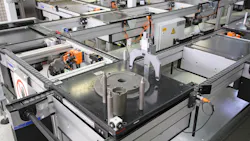
Bill LeAnna: You bring up a good point. Cabinet free basically allows you to have a more modular approach. And customers are absolutely looking for that modular, building block approach to where they can quickly visualize a new line layout or production line and really better understand its capabilities.
Power & Motion: What challenges still exist when developing automation solutions, or related to uptake of automation solutions? What could help overcome these challenges?
Richard Vaughn: From my side, some of the challenges I see...you get into the environmental side of it, and this holds true for some of the life sciences sector and other industries as well — now you're seeing automation in these areas that would be a clean room environment to where you have to meet a certain specification. Can your linear actuator actually perform in that environment? What type of seals are being used, contaminants, etc. that you could get into the environment?
With that, it drives development toward new product. Similar to my example with the electromechanical cylinders having to operate in larger sizes, it just drives a new trend in the industry that not only ourselves but our competitors [have to follow]. You have that need to have those sizes or be able to modify your existing portfolio to fit in those environments and make them work.

Joaquin Ocampo: Justification on the return on investment is the challenge. The money — is it coming, are we going to spend it, are we not going to spend it? I think that’s the number one challenge. I truly believe that at the end of the day, when you add automation, you will get your return on investment. I think the question is how long is it going to take to get the return on investment and you start making money. That nowadays is a truly big challenge.
The other one is knowledge. Now we’re all talking about the buzzwords — AI, edge communication, remote connection, statistics and collecting data. Collecting the data is one thing, but the challenge is making useful information of that data. I think that’s another challenge. We have all these specialists making useful information of the data; I think that resource pool has not grown as much as is required nowadays. Everything’s being collected, but making useful information out of that is the challenge right now.
Bill LeAnna: Cost and lead time are our biggest challenges when we’re approaching a new automation opportunity. Many times the lead time requests or requirements are completely unrealistic. Customers want to get their lines up and running as soon as possible so they can start making that money back, right? And so that is one of the largest challenges; having inventory to put together the systems that these customers are requesting, and then the supply chain, just having the supply chain work properly during that process. So that's the biggest thing.
But many times, believe it or not, if you can supply an acceptable lead time, the cost is less of an issue. So that's what we're seeing — lead time is really probably the top [priority] where cost is second.
About the Author
 Sara Jensen
Sara Jensen
Executive Editor, Power & Motion
Sara Jensen is executive editor of Power & Motion, directing expanded coverage into the modern fluid power space, as well as mechatronic and smart technologies. She has over 15 years of publishing experience. Prior to Power & Motion she spent 11 years with a trade publication for engineers of heavy-duty equipment, the last 3 of which were as the editor and brand lead. Over the course of her time in the B2B industry, Sara has gained an extensive knowledge of various heavy-duty equipment industries — including construction, agriculture, mining and on-road trucks —along with the systems and market trends which impact them such as fluid power and electronic motion control technologies.
You can follow Sara and Power & Motion via the following social media handles:
X (formerly Twitter): @TechnlgyEditor and @PowerMotionTech
LinkedIn: @SaraJensen and @Power&Motion
Facebook: @PowerMotionTech