Mobile vs. Industrial Fluid Power: Comparing Application Technology Needs
Key Highlights
- Both mobile and industrial machinery manufacturers share the same performance objectives such as increased uptime and performance.
- Technological strategies differ between mobile and industrial machinery due to different customer and industry priorities.
- Mobile applications tend to place a higher priority on electrification, connectivity and maintenance while industrial applications view safety, precision control and automation as higher priority design areas.
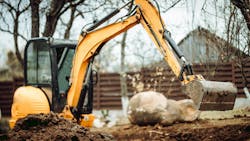
Fluid power, the collective term for hydraulics and pneumatics, is utilized to transmit power in several types of applications which are commonly categorized as either mobile or industrial. Although there are some similarities in technology requirements for mobile and industrial applications, there are also several differences.
To provide insight into the technology needs for each application type, the National Fluid Power Association (NFPA) held a panel discussion during its 2025 Industry & Economic Outlook Conference (IEOC) that brought together representatives from both the hydraulics and pneumatics segments of the fluid power industry.
The discussion was framed around findings from the NFPA’s most recent Technology Roadmaps — one released in 2023 with more of a mobile application focus and one in 2025 focused specifically on industrial applications. These roadmaps are designed to identify pre-competitive research and development needs across the fluid power supply chain.
Through the information shared during the panel discussion, it is possible to gain a better understanding of the unique requirements for mobile and industrial applications so those developing fluid power technologies can ensure their solutions continue to meet desired performance needs.
Learn more about the NFPA’s most recent Technology Roadmaps in the below articles.
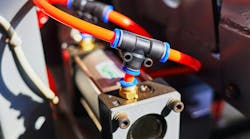 Pneumatic cylinder and tubing installed on an industrial machine
Performance Objectives are the Same for Mobile and Industrial Machinery
What are mobile and industrial applications for fluid power?
The main customer markets for fluid power are usually divided into two types, mobile or industrial. Machines that move, such as construction equipment and agricultural machinery, are considered mobile applications while industrial applications are typically associated with stationary machines like packaging machinery as well as metalworking and machine tools.
The high-level performance objectives machine builders and original equipment manufacturers (OEM) desire for their machines, referred to as Customer Drivers in the NFPA Technology Roadmaps, is one of the areas in which there is complete agreement between mobile and industrial applications.
They and their customers want machines to provide:
- increased availability and uptime
- increased productivity and performance
- lower total cost of ownership
- compliance with regulations.
As such, they look for fluid power and other technologies which can help meet these performance objectives.
Ryan Jenkins, a hydraulics engineer with CNH Industrial, said during the NFPA IEOC panel discussion that CNH places equal importance on all of these objectives when developing its construction and agricultural machinery. Productivity and performance though typically outweigh the others because that is what is most valuable to end-use customers, he said.
He noted that the priority level for these objectives can sometimes differ based on industry segment, whether the machine will be used for an agriculture or construction application, as well as if it’s a high- or low-horsepower machine. But overall, he confirmed these are key objectives for manufacturers in the mobile equipment space like CNH.

Jon Jensen from SMC Corp. (no relation to author) said that for customers in industrial applications, increased availability and uptime and increased performance have been the most important drivers. However, he said lower total cost of ownership is becoming a larger part of the conversation as well due in part to efforts by large manufacturers in particular to reduce their energy costs and environmental impact.
Compliance with regulations is also gaining in importance because a greater focus is being placed on both food and machine safety than has been the case in years past, said Jensen.
Mobile and Industrial Applications Prioritize Different Technology Strategies
The technology strategies OEMs and machine builders put in place to achieve their performance objectives is where the differences between mobile and industrial applications start to take shape.
As the chart below outlining the technology strategies for each application shows, not only is there a difference between the technological strategies employed but also their priority level. For instance, maintenance is the third most important for mobile applications but fourth in the priority list for industrial machinery.
Jenkins said maintenance is important for many mobile machinery owners because uptime is critical to their business, particularly for those in the agriculture industry. Farmers may only have a window of a couple of weeks to get into a field to plant or harvest their crops. If their machines go down during that time and cannot be repaired quickly, it can negatively impact their income for the year.
On the industrial side, Jensen said there is an expectation at this point that machines are equipped with sensors and other technology to monitor for potential maintenance issues so they can be addressed before a machine goes down. This provides the opportunity to schedule repairs instead of scrambling to fix a problem only when a machine goes down.
While electrification was indicated as the number one priority for mobile applications, Jenkins said that is not necessarily the case from CNH’s perspective. But he also noted that there are two sides to electrification — one of which involves decarbonizing the prime mover of a machine, such as replacing an engine with batteries, while the other relates to greater integration of electronic components like sensors, often referred to as electronification.
The latter is an area in which many OEMs, including CNH, and fluid power companies are working to increase connectivity, precision and control, and other performance aspects. In the years to come, some machine systems are likely to become more electrified to meet various performance requirements as well as aid efforts to automate systems and machines.
Anant Jain of Danfoss Power Solutions pointed to steering and braking systems as an example during the panel discussion. Many of these systems are transitioning to by-wire technology, meaning they are electronically controlled which helps achieve various performance improvements such as safety and control. However, he noted this does not mean hydraulics are being eliminated but instead becoming more electrified to further enhance their performance.
Decarbonizing a machine’s prime mover is also an area of electrification CNH and others are working in but remain on a case-by-case basis as not all industries or applications are suited to being electrified. Large, high-horsepower machines, for instance, continue to be difficult to electrify because of their power requirements. In these cases, hybridization or use of some electrified systems is the better option to achieve the benefits of electrification such as reduced energy use.
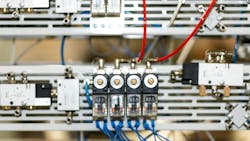
Electrification was listed as a lower priority for industrial applications, though still important from a technology strategy standpoint. Jensen said in this space there are initiatives to replace pneumatics with electric actuation, often to achieve efficiency and control improvements. But the bigger trend he sees is the use of electronic controls with pneumatic systems to improve control performance, which is a more critical factor for many industrial machinery customers. He said the switch to electric actuators is typically only made if very precise control or acceleration and deceleration is required.
Instead, safety is the most important technology strategy for industrial machinery manufacturers. Jensen said machine safety has become a higher priority for many in recent years partly due to European and other markets requiring machinery to meet certain standards to ensure the safety of those working around the machines. If a company has a global footprint, then it will want to have a consistent design in terms of safety to ensure it can sell machinery in all parts of the world which has led to safety becoming a higher design priority.
In addition, rising concerns about food safety have helped make safety a higher priority as well. Recalls of various food products have increased over the past few years, placing a greater emphasis on the need to produce food in a safe manner — and therefore design machines and systems that enable this to be achieved. Jensen also noted that recent changes in food safety laws around the world have helped increase the emphasis on safety for many machine builders.
Understanding these differences in technology priorities for mobile and industrial is critical to ensuring fluid power solutions are capable of meeting each application’s specific performance and industry requirements. In addition, it can help inform future development efforts for hydraulics and pneumatics companies so their technologies continue to remain relevant and beneficial to customers.
About the Author
 Sara Jensen
Sara Jensen
Executive Editor, Power & Motion
Sara Jensen is executive editor of Power & Motion, directing expanded coverage into the modern fluid power space, as well as mechatronic and smart technologies. She has over 15 years of publishing experience. Prior to Power & Motion she spent 11 years with a trade publication for engineers of heavy-duty equipment, the last 3 of which were as the editor and brand lead. Over the course of her time in the B2B industry, Sara has gained an extensive knowledge of various heavy-duty equipment industries — including construction, agriculture, mining and on-road trucks —along with the systems and market trends which impact them such as fluid power and electronic motion control technologies.
You can follow Sara and Power & Motion via the following social media handles:
X (formerly Twitter): @TechnlgyEditor and @PowerMotionTech
LinkedIn: @SaraJensen and @Power&Motion
Facebook: @PowerMotionTech