Mobile vs. Industrial Fluid Power Applications: Understanding the Differences
What You'll Learn
- The performance benefits hydraulics and pneumatics bring to various applications.
- How the mobile and industrial applications which use fluid power systems differ from one another.
- Examples of common mobile and industrial applications utilizing fluid power technologies.
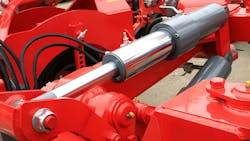
Hydraulics and pneumatics are used in a wide range of applications from construction equipment and machine tools to amusement park rides and robots. The power density, speed and other benefits offered by these fluid power technologies make them critical to the functionality of various systems and machines.
The applications in which hydraulics and pneumatics are used are typically categorized as either mobile or industrial.
While mobile and industrial applications have many similar technological needs, each also has their own unique requirements for the fluid power systems they use. Therefore, understanding what constitutes a mobile application versus an industrial one can help ensure hydraulics and pneumatics are developed in a way that enables them to meet the unique requirements of each application type.
As there can sometimes be confusion even among the most seasoned fluid power industry members about the differences between mobile and industrial applications, this article outlines several examples of each to help the fluid power industry gain a better understanding of these applications.
Mobile Fluid Power Applications
Mobile applications utilizing fluid power systems are those which are likely to move from one location to another either on their own, such as a vehicle, or pulled by something as is the case with tractor implements.
Both hydraulics and pneumatics are used in these applications. While hydraulics are able to provide the power density required by many mobile applications, the speed and lower total cost of ownership are among the benefits offered by pneumatics which are desirable in several machines and vehicles.
The following offer some examples of mobile applications which utilize various types of fluid power components and systems.
Aerospace – These applications typically include airplanes, spacecraft, rocket propulsion systems and other airborne objects.

Agricultural Equipment – Machinery used to plant and harvest crops of various types such as tractors, combines and sprayers as well as plows, spreaders and other implements.
Automotive – Both passenger cars and light trucks commonly use fluid power technology for braking, suspensions, steering and other systems.
Construction Equipment – The machinery used for the building of homes, offices, infrastructure and more such as excavators, skid steers, aerial lift equipment, and wheel loaders.
Entertainment – A category which can include amusement park rides such as roller coasters, animatronic objects as well as devices enabling special effects for stage shows of various types.
Forestry Machinery – The equipment used to cut and harvest wood which can include feller bunchers, harvesters, log loaders and more.
Lawn & Garden Equipment – This can include mowers of various types such as stand-on and zero-turn mowers, mulchers and other attachments as well as some utility vehicles.
Marine – Machines and vessels utilized in various types of waterways such as large cargo ships, fishing boats, passenger ferries, submarines and even racing yachts are included in this category.
Material Handling & Logistics – Machines and equipment that move around an operation to transport goods such as forklifts and material handlers.
Mining Machinery – Electric rope shovels, mine haul trucks and equipment that works in underground and surface mining environments to extract materials of various types.
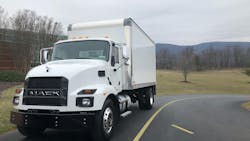
Rail, Truck & Bus – Modes of transportation to move people and goods including passenger and freight trains, Class 4-8 trucks as well as vocational trucks, and buses are included in this category.
Read More About Mobile Fluid Power Applications
View the below content for more insights on mobile fluid power applications.
The Future of Hydraulic Systems in Mobile Machinery
Understanding the Transportation Hydraulic Hose Market and its Future Opportunities
The Changing Landscape of Communication Protocols for Fluid Power Systems
How Connected and Software-Defined Vehicles are Reshaping System Architectures
Industrial Fluid Power Applications
In the National Fluid Power Association’s (NFPA) 2025 Industrial Technology Roadmap, the association notes the term industrial application is typically used in reference to stationary or in-plant equipment.
As many of these applications are utilized for the processing and production of goods, they often require fluid power solutions which offer speed and precision to ensure quality goods are produced as quickly as possible. Because of this, pneumatics is commonly utilized but there are also several machines that use hydraulics as well, particularly those requiring high levels of force such as presses.
Following are several examples of industrial applications which rely on hydraulics and pneumatics, including many which were cited in the NFPA 2025 roadmap.
Aerospace Manufacturing – This typically includes the machines and equipment used in the manufacture of products and parts used in airplanes, rocket ships and other aerospace applications.
Food Production - Machines and equipment used for the processing of raw ingredients into food and beverage products.
Medical Devices and Life Sciences – This can entail equipment that creates tools, instruments and other items that are used in healthcare, as well as the production of pharmaceuticals and laboratory work.
Metalworking and Machine Tools - Equipment used to cut or shape metal or metal parts.
Oil and Gas - Machinery used to extract oil and/or process it into gasoline.
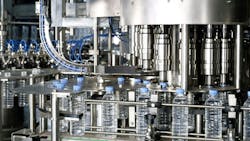
Packaging and Bottling - Machines and equipment used to pack products for storage, shipping, or sale.
Plastics and Rubber – Machinery and equipment used to process or make plastic or rubber products.
Power Generation – Refers to stationary equipment used to generate power, including through clean energy technologies such as solar, wind, and wave.
Primary Metals Manufacturing - Equipment used to extract, refine, and shape raw materials into metal products.
Recycling - Equipment that transforms waste into reuseable resources.
Robotics, Assembly and Material Handling – Stationary machines and equipment that move materials through a facility or perform assembly tasks, including various types of robots.
Semiconductors - Machines used to fabricate semiconductor chips, test them, and support their manufacturing process.
Vehicle Manufacturing - Machines and equipment used in the manufacture of both on- and off-highway vehicles such as passenger cars, trucks, buses and construction equipment.
Wood and Paper - Equipment used to process wood or paper products.
Read More about Industrial Fluid Power Applications
View the content below for further information on industrial fluid power applications.
Fluid Power Remains Fundamental to Industrial Applications
Hydraulics and Pneumatics Benefit a Range of Industrial Applications
Pneumatics a Key Piece of the Automation Puzzle in Packaging Applications
Phased Approach Eases Upgrades to Extrusion Press Hydraulics
About the Author
 Sara Jensen
Sara Jensen
Executive Editor, Power & Motion
Sara Jensen is executive editor of Power & Motion, directing expanded coverage into the modern fluid power space, as well as mechatronic and smart technologies. She has over 15 years of publishing experience. Prior to Power & Motion she spent 11 years with a trade publication for engineers of heavy-duty equipment, the last 3 of which were as the editor and brand lead. Over the course of her time in the B2B industry, Sara has gained an extensive knowledge of various heavy-duty equipment industries — including construction, agriculture, mining and on-road trucks —along with the systems and market trends which impact them such as fluid power and electronic motion control technologies.
You can follow Sara and Power & Motion via the following social media handles:
X (formerly Twitter): @TechnlgyEditor and @PowerMotionTech
LinkedIn: @SaraJensen and @Power&Motion
Facebook: @PowerMotionTech