Strategies for Reducing Energy Loss in Industrial Drive Systems
What You'll Learn
- Where energy losses typically occur in industrial drive systems and approaches to addressing them.
- How a full-system design approach can help achieve efficiency gains.
- The role maintenance, monitoring and smart control strategies also play in improving efficiency.
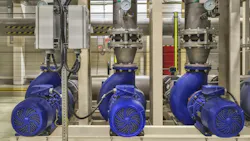
Industrial drive systems are one of the biggest sources of hidden energy loss in modern facilities. Motors, gearboxes, control systems, and other components introduce inefficiencies that add up over time, sometimes draining more power than expected.
But most of these losses aren’t inevitable. With careful design choices and smarter control strategies, engineers can improve efficiency without sacrificing performance.
Understanding Where Energy Loss Actually Happens
Before improving efficiency, it helps to understand where the losses originate. Industrial drive systems often waste energy due to different kinds of inefficiencies: mechanical, electrical, and control.
Some of the most common sources include:
- electrical losses in motors due to resistance, heat, or poor power quality;
- mechanical losses from friction in bearings, gears, or couplings;
- inefficiencies in oversized or improperly matched components;
- energy wasted during acceleration, braking, or idling states;
- control system inefficiencies that fail to adapt to load conditions.
These losses may seem minor individually, but in continuous operations, they can add up quickly. That’s why optimizing the entire system, not just one component, matters.
To do so, it is important to understand the role each component plays within the system and factors to consider when choosing components to achieve a more efficient industrial drive system design.
Selecting High-Efficiency Motors
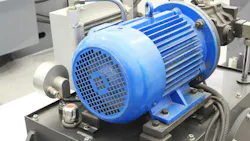
Motor selection is one of the most important decisions in drive system design. High-efficiency motors are engineered to reduce electrical and thermal losses through better materials and improved winding designs.
But efficiency goes beyond the motor itself; it also involves sizing. Oversized motors often operate below their optimal load range, reducing efficiency, while undersized motors can overheat and wear out quickly. Matching motor capacity to the actual load profile is just as important as choosing a high-efficiency model.
Variable frequency drives (VFDs) also play a key role. Rather than running motors at constant speed, VFDs allow speed to match demand, reducing energy consumption in applications like pumps and fans.
Optimizing Gearboxes and Transmissions
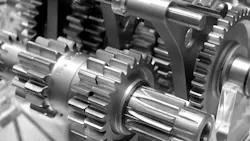
Mechanical transmission systems are another major contributor to energy loss. Every gear mesh and bearing surface, along with each coupling, introduces friction that leads directly to lost energy.
Selecting gearboxes designed for minimal loss can help. For example, a properly specified NEMA gearbox can standardize mounting while maintaining efficient torque transmission. Internal design factors like gear geometry and lubrication, along with material quality, all influence performance.
Reducing unnecessary gear stages is another effective strategy. Each additional stage increases cumulative losses, so simplifying the transmission path can have a noticeable impact.
Alignment is also needed. Misaligned shafts or couplings create extra friction and vibration, reducing efficiency and accelerating wear. Precision during installation and regular alignment checks help prevent these issues.
Smarter Motion Control Strategies
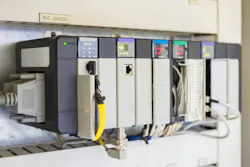
Even with efficient hardware, poor control strategies can waste energy. Traditional systems often run at fixed speeds or follow rigid motion profiles that don’t reflect actual needs.
Modern approaches focus on adaptability. Using real-time feedback, systems adjust speed and torque dynamically, reducing unnecessary energy use during partial loads or idle periods.
Key opportunities to improve efficiency through motion control include:
- optimizing acceleration and deceleration profiles to reduce energy spikes and mechanical stress;
- using adaptive speed control to match output with demand;
- minimizing idle or low-load operation through smarter automation logic;
- implementing regenerative braking to recover energy rather than dissipating it as heat.
Note that abrupt starts and stops also demand high energy and generate heat, while smoother ramping reduces peak demand and losses.
System-Level Design Factors to Consider When Optimizing for Efficiency
Focusing on individual components is important, but the biggest gains often come from system-level thinking. How components interact can either amplify or reduce inefficiencies.
Matching motor characteristics to gearbox ratios ensures both operate within optimal efficiency ranges. If one component is out of sync, the entire system suffers.
Load variability is another factor. Systems designed only for peak load conditions often operate inefficiently during normal conditions. Designing for a broader operating range or incorporating adaptive controls helps maintain efficiency across different scenarios.
Thermal management also plays a role. Excess heat wastes energy and can degrade components over time, while proper ventilation and cooling help maintain efficient operation.
Minimizing idle time is often overlooked. Equipment that runs continuously, even when not needed, consumes significant energy. Intelligent scheduling and automation can reduce unnecessary operation.
The Importance of Maintenance and Monitoring for Sustained Efficiency
Even the best-designed systems can drift into inefficiency if they’re not maintained properly. Wear, contamination, misalignment, and similar issues gradually increase energy loss over time.
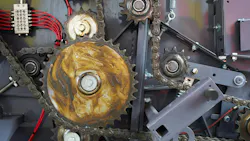
Routine maintenance helps keep industrial drive systems running at optimal performance. This includes lubrication, alignment checks, mechanical component inspections, and similar tasks.
Condition monitoring takes this further: Using sensors and data analytics allows engineers to track performance and identify inefficiencies early. Changes in vibration, temperature, power consumption, or other factors often indicate developing issues.
Core areas to monitor include:
- motor current and voltage for signs of electrical inefficiency;
- vibration levels indicating misalignment or bearing wear;
- temperature increases that suggest friction or overload;
- power consumption trends that reveal hidden energy losses.
With the right data, maintenance becomes proactive, helping prevent both energy waste and unexpected downtime.
Balancing Efficiency with Performance and Achieving Long-Term Gains
Maximizing efficiency isn’t always the only goal. Some applications require rapid acceleration and high torque or precise positioning that can increase energy consumption.
The key is optimizing a drive system design for the specific application rather than chasing efficiency in isolation. A high-speed production line may prioritize throughput, while a continuous process system may benefit more from steady-state efficiency.
Designers should also consider lifecycle costs rather than just upfront efficiency gains. A slightly more expensive component that reduces energy use and maintenance over time can deliver greater long-term value.
Reducing energy loss in industrial drive systems involves a coordinated approach across motors and mechanical components, along with control strategies.
Efficiency improvements often bring additional benefits — reduced heat generation, lower maintenance requirements, and longer equipment lifespan. These advantages make energy-efficient design a practical business decision.
As industrial systems continue to evolve, the ability to fine-tune motion control and minimize waste will only become more important. Engineers who take a holistic approach to design will be best positioned to deliver systems that perform well and last longer, while using energy more intelligently.
This article was written and contributed by Rebecca Banks, Marketing Content Strategist at STOBER Drives, Inc.
About the Author
Rebecca Banks
Marketing Content Strategist at STOBER Drives, Inc.
Rebecca Banks is the Marketing Content Strategist at STOBER Drives, Inc. Banks has been developing content for STOBER since 2021 and has more than 15 years of marketing experience. She holds a bachelor’s degree from the University of Kentucky and a Master of Science in Digital Marketing and Analytics from St. Edwards University.