Enhance Drivetrain Reliability Through a Systems-Level Approach
Key Highlights
- Understanding how all components in a drivetrain work together as a complete system can lead to improved performance and reduced downtime.
- Evaluating the entire drivetrain system is necessary during design and validation as well as when troubleshooting potential maintenance issues.
- Utilizing a systems-level approach and co-engineering early on, instead of after a failure occurs, better ensures the long-term performance of drivetrain systems.
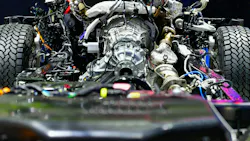
Demand for higher torque densities, more compact envelopes, as well as evolving regulatory and efficiency requirements are increasing the capability and complexity of today’s drivetrain systems. At the same time, uptime and reliability remain top design priorities.
To achieve these varied requirements, it is important to not only select capable components but also understand how those components interact as part of a complete rotating system. This is why employing a system-level approach is critical when designing, validating or troubleshooting a drivetrain system.
Why Evaluating the Entire Drivetrain System is Important
Despite advances in modeling tools and component technologies, unplanned downtime remains a persistent challenge across industries from marine propulsion and gas compression to power generation, material handling, and heavy industrial machinery.
In many cases, the root cause of failure is not an undersized bearing or a misapplied flexible coupling, but instead due to other factors that impact the drivetrain system as a whole.
Insights Gained from This Piece
For fluid power and other motion system technology developers whose technologies are used in drivetrains, it is beneficial to understand how a system-level approach can benefit the design of these systems. In addition, the information in this piece can be applied to a variety of other systems as well to improve their design and performance.
Drivetrains are often discussed as a collection of independent parts working together: engines or motors, gearboxes, couplings, bearings, mounts, etc.
However, these elements together function as a complex dynamic system. Loads, forces, and vibrations do not respect component boundaries; they propagate through interfaces and structures, often in unexpected and unique ways.
A drivetrain that appears sound when each component is evaluated independently can behave very differently once assembled and placed into operation. Torsional vibration, lateral displacements, resonance, and structural compliance can amplify small independent issues into larger operational ones extremely fast.
As a result, reliability should be understood as a developmental property of your system and not the sum of the individual parts’ performance within it.
This is especially true in applications where operating profiles vary, start-stop cycles are frequent, where flexible mounting is required, or where the structure supporting the drivetrain can contribute to its dynamic behavior.
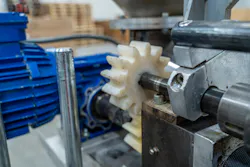
Calculations Don’t Tell the Whole Story
Analytical tools remain essential to effective drivetrain design. Torsional analysis, stiffness calculations, and load modeling provide critical insight and should never be skipped when available.
However, experience across industries continues to demonstrate that calculations alone are not sufficient to predict real-world drivetrain system behavior in the field.
Modern Tier 3 and 4 internal combustion engines present some real-world examples of how calculations alone and theoretically sound component level selections do not always add up to a reliable operating system. During recent sea trials, a vessel experienced severe and unexplained engine vibration, yet all component selections appeared accurate, and various system calculations supported a valid design. But this instance highlighted how calculations are just math, and reality can differ completely.
When individual component suppliers get engaged in supporting the theory of “nothing wrong with my product” or the owner starts to listen to the advice of whomever can scream the loudest, things can quickly turn in a very bad direction.
This disconnect highlights a broader and more common reality — real installations rarely match theoretical assumptions perfectly. Structural interactions, installation tolerances, operating loads, and unique operating conditions can introduce dynamic behaviors that were never fully anticipated in initial models.
Field validation is often the missing link between design intent and operational reality.
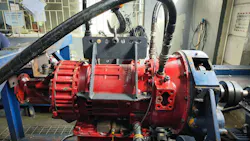
The Limits of Siloed Troubleshooting
When drivetrain issues arise, it’s typical for challenges to compound through organizational dynamics. Many complex systems typically involve multiple stakeholders, each being responsible for their own components or scopes of supply.
When problems start surfacing, diagnostic efforts start to suffer due to contractual boundaries and cross-functional availability rather than true systemic behavior analysis.
Each party typically focuses on providing insights into its own components and looking to prove that it isn’t their fault. Diagnostic firms may be asked to examine only a specific component, system segment, or performance claim. The result tends to be a collection of partial answers that may be independently correct — yet fail to solve the problem collaboratively.
This siloed approach frequently leads to component substitutions driven by opinion or urgency rather than the data itself. Time and money are spent changing engine mounts, flexible couplings, gearboxes or other elements without clear evidence that these changes may even address the real root cause.
Meanwhile, downtime continues and relationships risk getting strained due to a lack of solutions.
Use a System-Level Approach and Co-Engineering Early to Improve Drivetrain Reliability
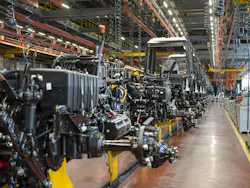
Reliable drivetrain performance depends not only on selecting the right components but also understanding how they will work together as a complete system. When the latter is taken into account earlier on in the design and troubleshooting processes, reliability can be better assured.
In addition, bringing co-engineering partners in early on — instead of after a failure occurs — can help ensure drivetrain system performance is maintained throughout its lifespan.
System-Level Diagnostics Can Lead to More Productive Troubleshooting
Effective drivetrain troubleshooting requires a shift in perspective. Rather than dividing the system into defensible territories and looking to point fingers elsewhere, one team must be empowered to own the system-wide view at hand. This team’s role is not to validate individual components, but to understand how the entire drivetrain behaves dynamically.
System-level diagnostics rely on comprehensive field measurements and instrumentation. Torsional vibration data, lateral and axial vibration measurements, and detailed performance analysis can reveal behaviors that are invisible when components are examined in isolation.
Just as importantly, this data must be interpreted by engineers who understand how operating conditions and loads, structures, and rotating components interact with each other across entire drivetrains.
Independence also provides an added benefit to this process. Diagnostic teams that are not confined to a single product or brand are better positioned to follow the data to its root cause. When incentives align with problem-solving for your system rather than component defense, root causes emerge more quickly and with greater clarity.
Co-Engineering Should be Used During the Design Phase
Co-engineering and third-party diagnostic support are often viewed as afterthoughts or tools of last resort, brought in only after repeated failures or extended downtime has persisted.
In practice, their greatest value frequently comes from being included earlier in the product lifecycle.

Engaging experienced system-level partners during the design phase allows assumptions to be challenged before they become constraints. Operating envelopes can be reviewed more critically, interactions between components can be explored in more detail, and measurement strategies can be planned before commissioning. When issues do arise later, early involvement shortens the path to solutions by eliminating guesswork and component-level troubleshooting.
As a general rule of thumb, co-engineering support should be considered whenever drivetrain behavior can be highly dynamic, operating conditions are complex or uncertain, or the cost of downtime is a significant hinderance to your operation.
New builds, repowers, variable-speed applications, and systems operating close to resonance zones all benefit from the collaborative approach brought on through co-engineering support.
While co-engineering is largely beneficial, not all engineering support is created equal. The most effective co-engineering partners share a system-first mindset and have the technical understanding to support it. They are equipped to measure what matters, interpret complex results, and remain engaged beyond a single design review or initial field visit.
Equally important to this is the willingness to think and understand beyond a single product scope. Partners who understand how bearings, couplings, gearing, and a wider variety of drivetrain components interact can help organizations move from reactive troubleshooting to proactive reliability and overall system improvement.
Drivetrain Designs That Consider Entire System Behavior Will Better Meet Industry Needs
As drivetrain systems continue to evolve, reliability will depend less on finding a single “better” component and more on understanding how the entire system behaves in practice with itself. Calculations will always matter, but they must be validated by experts who truly understand the components and applications themselves.
And individual components will always play a critical role, but they must be evaluated in the context of the drivetrain itself.
Ultimately, preventing unplanned downtime is not only a technical challenge — it’s an organizational one that benefits from early planning and a structured approach. System-level thinking, early co-engineering engagement, and data-driven diagnostics provide a clear path forward for industries where reliability is non-negotiable.
This article was written and contributed by Bob Lennon, Industry Manager, Expert, Regal Rexnord.
About the Author
Bob Lennon
Industry Manager, Expert at Regal Rexnord
Bob Lennon is Industry Manager, Expert at Regal Rexnord. He has over 40 years of experience, specializing in the torsional couplings market. As an industry manager,
he wears many hats, from global business development to serving as a subject matter expert for the power generation and marine propulsion industries. His career journey is rooted in the power transmission industry, starting with working alongside his father in distribution and manufacturing.