Industrial Pump Technology will be a Mix of Electric and Pneumatic
Key Highlights
- Use of electric pumps is increasing in many manufacturing facilities and other industrial applications to reduce energy costs.
- While electric pumps offer many benefits, pneumatic pump technologies will continue to be the better option in many applications.
- Evaluating performance requirements, available power supply and other factors is necessary to determine whether electric or pneumatic pumps — or a combination of both — are the best fit for an application.
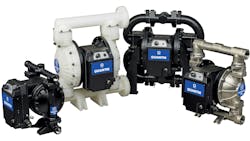
For years manufacturing facilities of various types have relied on pneumatic pumps for fluid handling. But as manufacturers look to reduce their energy consumption and become more sustainable, many are turning to electric pump options.
“You can significantly reduce your energy use when going from pneumatic to electric,” said Jeff Shaffer, Sales Director, Process Manufacturing, Industrial Division at Graco in an interview with Power & Motion. “It just takes less power to operate the pump. Compressed air systems are terribly inefficient; there's a lot of waste and a lot of leaks.”
As a developer of both pneumatic and electric pumps, Graco sees each technology suiting specific types of applications and manufacturing areas. Schaffer does see use of electric pumps increasing in the years to come but said pneumatic pumps will continue to be used as well.
Types of Pneumatic and Electric Pumps Commonly Used in Industrial Applications
There are several pneumatic and electric pump technologies available in the market which are commonly used in various industrial applications. Shaffer explained that every pump type has its niche regarding where it is used and the applications for which it is best suited.
Pneumatic Pumps
Pneumatic pumps use compressed air as their power source, enabling them to move fluids — both liquid and gases. Shaffer said the two primary air driven pump types are diaphragm and piston.
He said pneumatic diaphragm pumps have been used for many years due in part to their ease of use and ability to pump any kind of fluid in a facility. These pumps can be used for a variety of tasks, from pumping out drums, totes and sumps to aggressive chemical transfer, because they're pneumatic, he said.
Pneumatic piston pumps, on the other hand, are better able to pump higher viscosity materials.
Electric Pumps
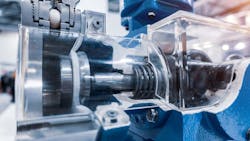
As their name implies, electric pumps are driven by electricity instead of compressed air as is the case with pneumatic pumps. Shaffer said there are a lot of electric pump options including:
- centrifugal pumps
- rotary load pumps
- gear pumps
- progressive cavity pumps.
Like their pneumatic counterparts, each type has different use cases for which they are best suited. Rotary lobe pumps, for instance, are heavily used in food and beverage applications while progressive cavity pumps are commonly used in sludge and water treatment facilities. Centrifugal pumps are the most widely used but can only handle low viscosity fluids, said Shaffer.
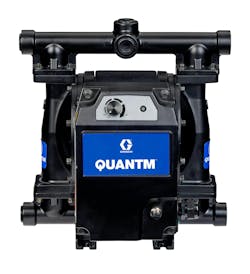
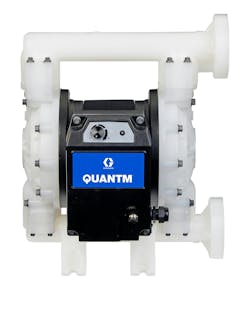
He noted Graco has also added an electric driven diaphragm pump to its offering which brings together the best of both pneumatic and electric pump technology.
It combines the benefits of a traditional pneumatic diaphragm pump — self-priming, the ability to run dry and handle particulates, and no rotating seal — with those of electric pumps — reduced energy consumption, a completely sealed system and more automation and control than typically possible with a pneumatic pump.
Why Industrial Facilities are Switching to Electric Pump Technology
The desire to reduce energy consumption and improve overall operational sustainability are some of the key reasons manufacturing and other industrial facilities are switching from pneumatic pumps to electric options.
As Schaffer explained, compressed air systems are known to be inefficient. This is due in part to the amount of energy they require to transfer energy, which can lead to increased costs and emissions output for an operation. Electric is considered to be more efficient because energy use can be better controlled, making it easier to use less and thus potentially reduce operational costs and emissions.
In pulp and paper, chemical manufacturing and other industries that commonly use diaphragm pumps, the pumps are often operating 4-6 hours or more a day. “Generally speaking, you can get a 2-year return on investment or less by switching from pneumatic to electric pump technology,” he said.
There are other factors driving the switch to electric pumps as well. Automation is becoming increasingly important in many manufacturing and processing facilities to help overcome labor challenges. With an electric pump, you can more easily tie it into a PLC (programmable logic controller) system, said Shaffer. This allows remote monitoring and control.
Controllability is a big part of the equation. He said when you run a pneumatic pump, you need an air regulator, solenoid or other device to control it and it can be difficult to dial in the pump operating conditions. Controlling an electric pump is much easier to do, he said.
Reduced noise is another factor prompting the switch. “Electric pumps are less noisy than pneumatic pumps,” he noted, which helps to improve safety and comfort for personnel who may be working near a pump.
Another safety related benefit of electric pumps is the fact they are self-contained, adding some protection for workers should a fluid leak occur. As Shaffer explained, it may seem counterintuitive introducing an electric power source into potentially hazardous environments where pneumatic pumps are typically used. But because an electric pump is self-contained “if you get a fluid leak, it’s not going to get on the floor or come out the exhaust of the pump,” he said. This can be especially beneficial if pumping aggressive chemicals that could be harmful to people or the environment.
The cleaner operation of electric pumps is a desirable trait as well for many operations. Shaffer said compressed air is often dirty because the air source may have oil, water and debris in it. Filter regulators, dryers and other devices are commonly used to prevent contaminants from entering compressed air, but they may not be able to capture everything. Additionally, he noted an operation may not have the personnel necessary to effectively maintain a compressed air system.
For customers who have switched to electric, he said pump reliability has improved because seals or other components are no longer being damaged due to the presence of contaminants. Maintenance time and costs can be reduced, as well as the need for personnel with the skills required to repair a pump which is becoming increasingly difficult to find.
Capacity issues are another reason many manufacturers turn to electric pumps. A compressed air system may be powering several pieces of equipment which can mean not enough power makes it to the pneumatic pumps. Electric pumps, on the other hand, are able to provide smoother and more consistent operation because their power source, an electric motor, is typically attached directly to and only powering that pump.
“In some cases, you get better performance out of the electric pump because you’re not relying on a system that has a lot of ups and downs and different demands being placed on it,” said Shaffer.
How to Choose Between a Pneumatic Pump and an Electric Pump
Although use of electric pumps is increasing, there will remain instances in which a pneumatic pump is the better option. “The business is never going to 100% transition to electric,” said Schaffer.
Compressed air systems do offer benefits, he said. They’re installed everywhere, easy to use, and can essentially be plugged in and ready to go. In addition, he said pneumatic pumps are a little less costly than electric versions. “We're trying to get the price down as much as we can, but there is a little bit of added cost [associated with] putting a motor and controls in there.
“I don’t foresee the industry getting rid of pneumatic pumps,” he continued. “You can use electric when it makes sense and pneumatic when it makes sense.”
Schaffer said there are probably some industries that make more sense to transition to electric pumps than others, such as those in which several pumps are needed in an operation or have higher duty cycles. If only a couple of pumps are needed throughout a facility, then he said it may not make sense to go electric.
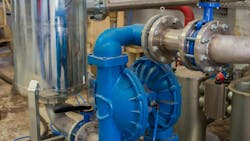
When determining which pump technology to use, Schaffer said the first step should be validating the two types from a performance standpoint. There are slight performance differences between pneumatic and electric pumps, he said. Because they are not completely interchangeable with one another, it is important to ensure when switching to an electric pump that it operates at the same capacity you had previously with your pneumatic pump.
The second most important step in deciding between pneumatic and electric pumps is understanding available power supply. “If you're replacing diaphragm pumps, for example, and going from pneumatic to electric, there's airlines all over because that's what you've been using,” said Schaffer.
So, if switching to electric pumps, it could be more difficult if the required power supply is not already available or possible to get to a site and therefore an important aspect to consider.
He noted that if transitioning to electric pumps for energy or cost savings, there is likely an opportunity to qualify for incentives. “If you want to leverage incentive money credits to help pay for the project, contact your power company first before you start making any [changes to pump technology], because they want to be aware upfront of what [you are] doing so they can make sure it fits into whatever incentive payout they have available in that area.”
Schaffer does see use of electric pumps continuing to rise in the coming years as manufacturing and processing plants try to become more sustainable as well as smarter and more automated. As people become more familiar with electric pumps and understand their benefits, they are likely to use them more in their operations.
However, there will still be a strong use case for pneumatic pumps going forward as well. He believes pneumatic diaphragm pumps, for instance, are likely to remain the primary style used because of the many benefits they can provide.
Electric will be an option though that can help supplement pumping needs, and allow facilities to choose where and when it makes sense to use either pump technology. “It'll become another tool in the toolbox for plant managers and engineers to [determine] this is an area that makes sense to go electric [while] this other area may be [better to use pneumatic],” he concluded.
About the Author
 Sara Jensen
Sara Jensen
Executive Editor, Power & Motion
Sara Jensen is executive editor of Power & Motion, directing expanded coverage into the modern fluid power space, as well as mechatronic and smart technologies. She has over 15 years of publishing experience. Prior to Power & Motion she spent 11 years with a trade publication for engineers of heavy-duty equipment, the last 3 of which were as the editor and brand lead. Over the course of her time in the B2B industry, Sara has gained an extensive knowledge of various heavy-duty equipment industries — including construction, agriculture, mining and on-road trucks —along with the systems and market trends which impact them such as fluid power and electronic motion control technologies.
You can follow Sara and Power & Motion via the following social media handles:
X (formerly Twitter): @TechnlgyEditor and @PowerMotionTech
LinkedIn: @SaraJensen and @Power&Motion
Facebook: @PowerMotionTech