Test System Design: Considerations for Actuator Selection
What You'll Learn
- The role actuators play in the functionality of test benches and laboratory systems.
- Six key design aspects that typically influence whether to use hydraulic, electromechanical or hybrid actuation technology.
- How test profiles, control requirements, existing environmental conditions and other aspects factor into actuator selection.
- The differences between each potential actuator technology and best use cases for each.
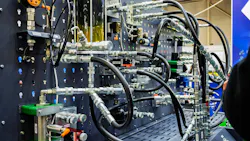
Test bench and laboratory systems play a crucial role in product development, validation, durability testing and lifecycle testing. These systems vary in size and complexity, many relying on linear actuators to apply controlled motion or load to a device under test.
Test engineers often face a different set of constraints than engineers designing production equipment. Test bench availability may be limited, development schedules can be aggressive, capital budgets may be tight, and a single system may need to accommodate multiple products or test profiles.
Once testing begins, the system may also be expected to cycle continuously for weeks or months while generating and logging consistent, reliable data.
These realities make the actuation system an important part of overall test system design. Reliability, flexibility, data acquisition, implementation time and operating cost should be considered alongside force, speed, stroke, duty cycle, and control requirements when evaluating hydraulic, electromechanical or hybrid actuation technologies.
6 Key Factors That Dictate Test System Designs
When developing a test system and choosing the actuation technology to utilize within it, there are six important design aspects that must be taken into account.
1. Minimizing Downtime and Maximizing Test Availability
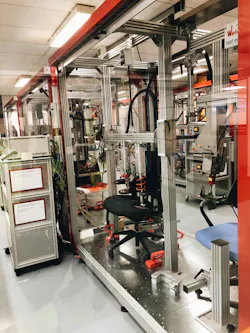
Test bench time is extremely valuable, especially within larger organizations where multiple departments and development programs may be competing for access to the same test equipment. When a test stand goes down, the impact can extend beyond the time required to make a repair. A missed testing window can delay validation, disrupt development schedules or result in valuable bench time being reassigned to another program.
Because of this, reliability and maintainability should be considered along with actuator performance when designing a test system. Engineers should evaluate expected maintenance requirements, potential wear points, accessibility of serviceable components and how quickly the system can be diagnosed and repaired if an issue occurs.
The expected test profile also plays an important role. An actuator can be capable of achieving an application’s required peak load, but that does not necessarily mean its suited to repeatedly execute that load over an extended endurance test. Considering force, speed, duty cycle and expected cycle life across the complete operating cycle can help minimize unplanned downtime and keep valuable test equipment available when needed.
2. Building Flexibility into the Test Stand
Unlike a dedicated production machine, a test stand in a lab may need to support multiple tests, components or programs throughout its operating life, making flexibility an important consideration in the overall system design.
Many test stands rely on mechanical stops, adjustment screws or other hardware changes to modify test parameters.
Programmable actuators can reduce mechanical adjustments by allowing parameters such as force, speed, and position to be changed through the control system, enabling quicker changeovers between test programs and reducing setup time.
3. Acquiring Reliable Test Data
The value of a test depends on the quality and reliability of the data it produces. Actuator position, applied force, pressure, speed, and other motion variables may need to be correlated with measurements collected from the device under test. If that information is unreliable, its validity can be compromised.
Feedback and communication capabilities should be considered early in the system design. Position and force or pressure feedback can provide real-time information about actuator performance, while industrial fieldbus communication can simplify the exchange of motion commands, feedback and system data with the test controller or data acquisition system.
4. Evaluating the Capital Investment
Budget constraints and capital justification can also influence test system design. When evaluating actuation technologies, comparing the initial cost of the actuator alone may not provide an accurate picture of the total investment.
Each actuation technology has different system requirements that can affect both the initial investment as well as long-term operating costs. Beyond the actuator itself, engineers need to account for power consumption, controls, feedback, plumbing or cabling, maintenance and other supporting components depending on the technology selected. Ongoing expenses that should also be considered include energy consumption, maintenance, and system upkeep.
5. Reducing Engineering and Implementation Time
The development of test systems is often tied to product development schedules, making the time needed to get a test stand operational an important consideration. Engineers might need to design, assemble, program, and validate the system within a limited timeframe.
The actuation technology selected can influence how much engineering is required to get the system running as engineers may have to size and integrate motors, drives, sensors, controls, program the required test sequences, etc.
A more integrated actuation solution can reduce this burden by providing a system where the components are already sized and designed to work together. Actuation systems that can be supplied assembled, programmed, and tested can also shorten the path from selection to an operational test bench.
6. Managing Energy and Operating Costs
Some test systems operate intermittently, others like lifecycle, fatigue, and durability test stands may run continuously for weeks or even months. For systems running this frequency, energy use and heat generation can have significant impact on operating costs.
Energy consumption can vary significantly depending on the actuation technology, so it should be evaluated across the complete test cycle.
Engineers should consider how much power is required during periods of actuation, loading and holding, as well as any additional energy or cooling required to manage heat generated by the system. Operator comfort and ergonomics within the test lab should also be considered when evaluating the overall system design.

Important Considerations When Selecting Actuation Technology
When it comes time to choose between a hydraulic, electromechanical or hybrid actuator for a test system, the following aspects should be considered.
Evaluate the Complete Test Profile
Force, speed, and stroke requirements can change throughout a test cycle. A test may require higher speed while approaching the device under test, higher force at a lower speed during loading, a controlled hold period and a different speed during return. Looking at only the peak requirements can leave out important parts of how the actuator will actually operate during the test.
Duty cycle and expected life are also important factors, especially for endurance and lifecycle testing. A system operating a few times per day has very different requirements than one cycling continuously for weeks or months. How often the actuator cycles, how long it operates under load and the total number of expected cycles should all factor into actuator selection.
Consider Control and Loading Requirements
Test systems require different levels of control depending on the application. Some applications may only need point-to-point positioning, others may need precise control of position, speed, or force throughout the test. Requirements may also include needing the system to move to a specific position and then transition to applying or holding a defined force.
Certain applications such as destructive testing and accelerated lifecycle testing can place excessive stress on actuators. Depending on the test, the actuator may experience shock loading or side loading. These conditions affect actuation technologies differently and should be considered early in the design process.
Feedback also plays an important role in both control and repeatability. Engineers should consider what needs to be controlled and measured, how quickly the system needs to respond to changing conditions, and how that information will be communicated to the test system.
Consider the Test Environment and Existing Equipment
Where the test system will operate can also impact technology selection. Available space, noise, heat, cleanliness, maintenance access, and available electrical or hydraulic infrastructure may all factor into the decision.
For environmental or durability testing, engineers might want to consider harsh operating conditions, explosion proof, shock, and vibration.
With a new system, the actuation technology can be considered as part of the overall mechanical and controls design. For an existing test stand, it may make more sense to keep cylinders, fixtures or other components that are still working and update only the portions of the system that need to change.
Comparing Actuation Technologies for Test Applications
Once the requirements of the test are defined, engineers can compare the different actuation technologies and determine which makes the most sense for their application.
Traditional Hydraulic Actuation
Traditional hydraulic systems are commonly used for testing applications that require high force and the ability to handle shock or externally applied loads. They can also make sense when hydraulic infrastructure is already in place.
The complete hydraulic system should be considered when evaluating this approach. Traditional hydraulic systems include the cylinder, a hydraulic power unit, reservoir, filtration, valves, hoses, piping and cooling. Noise, heat, fluid management, maintenance, flexibility, and available floor space can also be considerations, especially in laboratory environments.
For applications requiring more precise motion or force control, proportional or servo valves and feedback can be incorporated into the hydraulic system.
Electromechanical Actuation
Electromechanical actuators provide programmable motion without the need for hydraulic power or plumbing and can be a good fit for many test bench and laboratory applications.
When evaluating an electromechanical actuator, engineers should look at the combination of force, speed, stroke and duty cycle required by the test. Gear/screw backlash, shock and side loading should also be considered, particularly for demanding durability or lifecycle testing, as these loads negatively affect the mechanical components within the actuator.
Hybrid Actuation
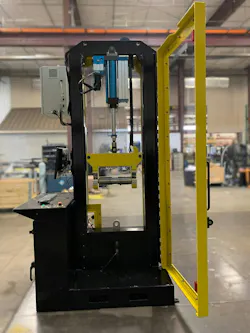
A hybrid linear actuator is a self-contained system that integrates a fluid-based cylinder with an electric servo motor and gear pump. This hybrid design combines the power density and load-handling capabilities of hydraulics with the control and flexibility of an electric actuator.
For test applications, hybrid actuation can be a good fit when higher forces, shock or side loading need to be balanced with control and changing test profiles. Power-on-demand operation can also help reduce energy use and heat generation during extended testing periods.
No One Size Fits All Actuation Solution for Test Systems
There’s no single actuation technology that is the right fit for every test bench or lab application. Selecting an actuator depends on the requirements of the test including force, speed, stroke, duty cycle, control, and feedback as well as other considerations like flexibility, reliability, and operating costs.
Understanding these requirements early in the design phase gives test engineers a clearer picture of what the actuation system needs to do and helps ensure the technology can support the current test requirements and how the test system may be used in the future.
This article was written and contributed by Carl Richter, President of Kyntronics.
About the Author
Carl Richter
Vice President and General Manager, Kyntronics
Carl Richter is the Vice President and General Manager at Kyntronics, a Cleveland-area (Solon, OH) manufacturing company specializing in advanced hybrid actuation solutions. With a background spanning both technical and business leadership, he drives innovation focused on energy efficiency, sustainability, and system-level performance. Richter is a published industry thought leader and frequent webinar contributor, with work featured in multiple industry publications on topics including electro-hydraulic efficiency and the transition toward electrified actuation systems.