Electrically Driven Hydraulic Pumps Enable Efficiency Gains and More
Key Highlights
- The need for higher efficiency, lower emissions, and advanced vehicle electrification is driving the need for technologies such as electrically driven hydraulic pumps.
- By combining a hydraulic pump with a brushless electric motor and integrated controller, PHINIA's line of electric pumps enable efficiency gains to be achieved.
- PHINIA's E-Pump line is optimized for use in vehicle cooling, lubrication and ventilation systems.
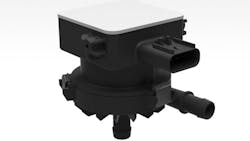
Hydraulic components such as pumps are commonly used in heavy-duty trucks, mobile off-highway equipment and other applications to enable a wide range of functions. But an increasing emphasis on improving efficiency and other performance factors as well as reducing emissions from these vehicles is prompting the need to re-evaluate the design of traditional hydraulic pumps and other components to achieve these goals.
Recognizing these evolving market needs, PHINIA — a developer of fuel and electrical systems — decided to expand its hydraulic pump portfolio to include electrically driven options for use in cooling, lubrication and ventilation systems. The company already offered mechanically and electrically driven hydraulic pumps for fuel transfer and used this expertise to develop its new line of electric pumps (E-Pumps).
Power & Motion spoke with Duane Collins, Director of Mechanical Engineering at PHINIA, to learn more about the company’s E-Pump technology and how he sees use of such solutions continuing to grow in the coming years.
*Editor’s note: Questions and responses edited for clarity.
Power & Motion: What prompted the company to expand its hydraulic pump portfolio to now include electric pumps?
Duane Collins: PHINIA currently supplies two types of pumps within the engine management system. The primary function of the first pump is to transfer fuel from the tank to the engine. Meanwhile, the second pump is used to boost the fuel pressure to the level required by the injectors.
Over the years, PHINIA’s fuel transfer pump portfolio has expanded to include gasoline, ethanol, and diesel pumping sections. Similarly, our motor offering includes both brush and brushless types, as well as the ability to design and integrate fuel pump controllers into our fuel systems.
So, as we planned for market changes brought on by the increased demand for hybrid and electric vehicles, we looked for ways to apply our knowledge of electric fuel pumps into other applications. This is why we decided to explore electric pumps for the transfer of oil, water, and air. These pump types make use of the same building blocks and overall assembly architecture of our current portfolio. What’s more is that the power displacement associated with these new products also falls within the range we are familiar with managing.
PHINIA’s hydraulic pump portfolio includes a broad range of fuel pumps with mechanical and electric drives. The expansion was into other hydraulic applications such as oil, water and air. Unlike fuel pumps, these applications typically require the pump to be integrated with a brushless electric motor and its controller. Since our fuel delivery module products may include pumps with brushless motors and controllers, the building blocks to develop new hydraulic pump products for other automotive systems were already in place.
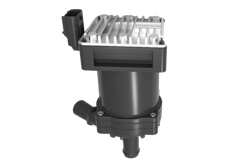
Power & Motion: Can you provide an overview of how the E-Pump technology works
Duane Collins: All electric pumps are built around three primary building blocks. First, the hydraulic pump section that is optimized for the specific application fluid, be that gas, ethanol, diesel, oil, water, air. In the pressure range we typically operate in, low viscosity fluids are best served by turbine type pump sections, while higher viscosity fluids require positive displacement designs. For those applications, we use gerotor architectures, which offer precise flow control and high efficiency.
Second is the electric motor, which is carefully tuned to the pump’s torque-speed operating point and controller. Across our new oil, water, and air pump families, we are standardizing on brushless motor technology to deliver higher efficiency, durability and control.
The third building block is the controller, which drives the brushless motor and manages communication with the vehicle-level control system. Importantly, all of our new pumps are being designed with the controller fully integrated into the pump assembly, reducing system complexity while improving reliability.
PHINIA’s deep expertise across each of these three building blocks provides a strong technical foundation for the development of our next-generation electric oil, water, and air pump families.
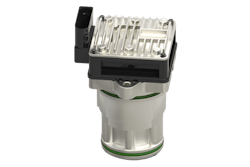
Power & Motion: How, if at all, does the E-Pump technology differ from the company’s other hydraulic pump solutions, or are hydraulics still involved?
Duane Collins: PHINIA’s current fuel pump portfolio is already electric, so the shift with E-Pump technology is not about moving away from hydraulics, but rather about expanding our capabilities to pump different types of fluids.
Each of the three new fluids poses a unique set of engineering challenges that require tailored design solutions. For example, oil viscosity varies across the vehicle’s operating temperature range, compared to that of diesel fuel in a tank environment. To address this, we have focused on precisely tuning the internal clearances of our gerotor pumping section to ensure consistent performance and efficiency under all conditions.
Water pumping introduces a different set of design requirements, particularly around corrosion resistance. In the case of air pumping, the challenge shifts again. Air systems operate at much higher motor speeds than fuel or liquid-based pumps, placing greater emphasis on motor design and control strategies.
So, while hydraulic principles remain fundamental to how the pump sections operate, the E-Pump platform reflects PHINIA’s ability to adapt those principles to very different fluids and operating environments.
Power & Motion: What makes these pumps different or unique compared to other similar types of electric pumps that may already exist in the market?
Duane Collins: Our new E-Pumps are designed to be competitive with existing solutions in the market, but differentiation lies in how they balance efficiency, performance, and durability rather than any single headline feature.
The primary objective of this portfolio expansion is to deliver superior power efficiency while meeting — and exceeding — customer performance and durability requirements.
Drawing on PHINIA’s long-standing experience in high-volume, safety-critical pump applications, these E-Pumps are engineered with an OEM mindset: designed for real-world operating conditions, validated for durability, and optimized for efficient operation across the full duty cycle.
Power & Motion: What is the benefit of using an E-Pump technology versus a traditional hydraulic one and what applications are these pumps best suited for?
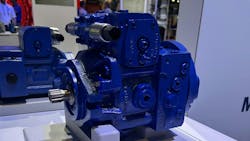
Duane Collins: Traditional hydraulic pump technology has been around for many years. It has proven to be a reliable and effective solution for vehicle needs. In our industry, technology continues to advance, along with performance expectations, so we are working to actively support vehicle efficiency needs with this E-Pump technology.
E-Pumps offer a significant efficiency advantage over traditional mechanically driven pumps, largely due to the level of speed and output control they enable. When paired with vehicle level feedback, electric pumps can be commanded to run at precisely the speed required to deliver the flow and pressure needed at any given moment.
In contrast, mechanical pumps run at a fixed speed tied to engine operation, which means they often produce excess flow and pressure when demand is low, creating unnecessary parasitic losses and reducing overall system efficiency. For this reason, our new E-Pump products are well suited for oil, water and air pump automotive applications, where variable demand and efficiency optimization are critical.
Power & Motion: Do you see use of electric pumps increasing in the years to come? If so, what factors will drive uptake of these pumps?
Duane Collins: Yes, we do expect demand for electric pumps to increase in the coming years. As automotive systems continue to target higher efficiency and lower emissions, E-Pumps become an enabling technology rather than a simple component choice.
Industrial applications are also seeing an uptick in use of electric pump solutions to achieve efficiency improvements. Read our article "Industrial Pump Technology will be a Mix of Electric and Pneumatic" to learn more about this trend.
Electric pumps allow OEMs to move beyond fixed-output systems by introducing variable-flow control, supported by integrated sensors and onboard diagnostics. This enables more precise management of fuel, oil, and coolant flow, ensuring each system operates only at the level required for the prevailing conditions.
At the same time, increasing system electrification and the shift toward more software-driven vehicle architectures are accelerating adoption. Together, these trends make E-Pumps a critical tool for achieving efficiency, emissions, and performance objectives across a wide range of future powertrain and thermal management applications.
About the Author
 Sara Jensen
Sara Jensen
Executive Editor, Power & Motion
Sara Jensen is executive editor of Power & Motion, directing expanded coverage into the modern fluid power space, as well as mechatronic and smart technologies. She has over 15 years of publishing experience. Prior to Power & Motion she spent 11 years with a trade publication for engineers of heavy-duty equipment, the last 3 of which were as the editor and brand lead. Over the course of her time in the B2B industry, Sara has gained an extensive knowledge of various heavy-duty equipment industries — including construction, agriculture, mining and on-road trucks —along with the systems and market trends which impact them such as fluid power and electronic motion control technologies.
You can follow Sara and Power & Motion via the following social media handles:
X (formerly Twitter): @TechnlgyEditor and @PowerMotionTech
LinkedIn: @SaraJensen and @Power&Motion
Facebook: @PowerMotionTech