How to Select Motion System Components for Dust-Heavy Environments
Key Highlights
- Prioritizing consistent motion over extreme precision is necessary when selecting the hardware for motion systems that will be used in dust-heavy environments.
- Choosing components made from hardened steel, corrosion-resistant materials, and those with surface treatments can help ensure long-term performance.
- Physical barriers like bellows, strategic component placement as well as flat geometries can prevent dust ingress, extending the lifespan of linear and rotary motion systems.
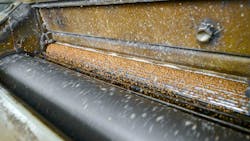
Dust rarely looks dangerous. It hangs in the air, settles on steel and collects where no one pays much attention including within linear and rotary motion system components.
When this occurs, dust turns aggressive. Fine particulates work into bearings, grind against guide surfaces and mix with lubricants to form abrasive compounds. This can lead to precision drops, heat generation and premature component failure.
Engineers designing equipment for grain facilities, cement plants, mining operations and bulk material handling environments know this reality well. In these settings, dust is a constant, not just an occasional disruption. The challenge is not eliminating particulates from the air, rather it is designing linear and rotary motion systems that continue operating accurately while abrasive particles are always present.
Meeting that challenge requires a clear blueprint for resilience:
- Hardware should be evaluated through the lens of contamination, not just performance ratings.
- Materials must resist abrasive wear, while specialized lubrication should be used to protect contact surfaces under continuous particulate exposure.
- Physical barriers must work in tandem with intentional component geometry to control dust before it reaches precision interfaces.
When these elements operate together, linear and rotary motion systems can maintain accuracy even in harsh industrial conditions.
Therefore, understanding the design features to look for when selecting hardware, materials and lubricants, and physical barriers can ensure the long-term performance of motion systems that will be used in dusty-heavy environments.
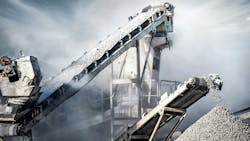
Choose Consistent Motion Over Precision When Selecting Hardware Components
When choosing the hardware that will be used in a motion system, it is important to know that linear motion components often show damage first.
Ball rails and ball screws deliver high positioning accuracy, but they rely on clean rolling contact. Once fine particulates enter the raceway, they act like cutting tools. Surface scratches form quickly, friction increases and wear accelerates with every cycle.
If the motion system is going to be used in dust-heavy environments, designers must rethink performance priorities. Extreme precision may look impressive on a specification sheet, but consistent, repeatable motion over long operating hours usually delivers more value. Cam rollers, track rollers and plain bearing slides tolerate contamination far better than rolling-element systems. While they sacrifice some accuracy, they continue operating when dust levels would cripple more sensitive components.
Sealed linear modules provide another durable option. Many are designed with enclosed raceways, integrated wipers and protected drive elements that limit particulate entry from the start. While these systems cost more upfront, they often reduce downtime, replacement frequency and long-term maintenance demands.
Rotary motion systems face similar challenges. Motors with open ventilation paths pull dust directly into the housing, where it coats windings and traps heat. Elevated operating temperatures shorten motor life and reduce reliability. Totally enclosed fan-cooled motors limit particle entry and perform more consistently under continuous duty. In severe environments, motors with multi-stage sealing systems provide added protection.
Gearboxes and rotary tables demand equal attention. Shaft seals rated for particulate exposure, paired with shielded bearings, slow contamination migration into internal components. Filtered breathers allow pressure equalization without drawing airborne dust inside. These details often determine whether a gearbox delivers years of service or fails early.
Component placement reinforces hardware selection. Mounting motors or actuators directly beneath material discharge points exposes them to constant debris. Relocating components away from direct material flow — even by a short distance — can significantly reduce contamination. Smart layout decisions often improve reliability without changing a single part number.

Materials and Lubricants That Slow Wear Offer the Best Options for Dust-Heavy Environments
Once hardware choices are made, material selection becomes the next line of defense. Fine particulates act as abrasives the moment they contact moving surfaces, so materials must resist cutting, erosion and surface breakdown over time.
Hardened steel remains a dependable choice for shafts, rails and bearing races due to its strength and dimensional stability. In dust-heavy environments, surface treatments are just as important as the base material. Chrome plating, nitriding and wear-resistant coatings reduce surface roughness and slow abrasive wear without altering system geometry or load capacity.
When dust combines with moisture, corrosion introduces another failure mode. Stainless steel often performs better in these mixed environments by resisting surface degradation that creates new entry points for particulates. Maintaining smooth, corrosion-resistant surfaces helps preserve motion quality across long operating cycles.
Polymer-based bushings and composite bearings offer a different advantage. Many are self-lubricating and allow fine particles to pass through the bearing interface instead of embedding in raceways. While these materials may sacrifice some positioning accuracy, they deliver steady motion where contamination cannot be fully controlled.
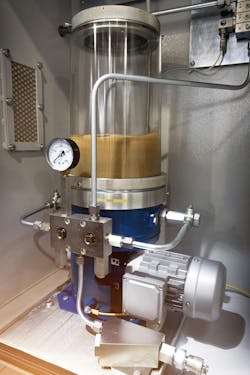
Lubrication strategy must support these material decisions. Excess grease attracts dust and turns it into abrasive slurry. Too little lubrication increases friction and heat. Controlled application is critical. Greases with solid additives such as graphite or molybdenum disulfide maintain boundary lubrication even when particulates enter the interface. These additives continue protecting surfaces after base oils thin or migrate.
Automatic lubrication systems reinforce this discipline by delivering small, consistent amounts of lubricant at regular intervals. This reduces buildup, limits variation and supports longer service intervals without relying on manual application.
Oil-lubricated systems require tight containment. Open oil baths rarely survive in abrasive environments. Enclosed gearboxes with circulating oil and fine filtration keep contaminants away from gears and bearings. Magnetic drain plugs capture metallic debris before it recirculates. Oil viscosity should match load and operating temperature to maintain a stable lubricating film without unnecessary drag.
Consider Flat Surfaces and Sealed Components to Create Physical Barriers Against Dust
Materials and lubrication slow wear, but physical protection prevents damage from starting in the first place. Seals are a starting point, but they rarely provide enough protection on their own. Bellows around linear actuators block debris from settling on screw threads and guide surfaces. Telescoping covers shield rails across their full stroke. Shrouds and guards protect exposed drive components from direct impact and airborne dust.
Component geometry strengthens these barriers. Flat horizontal surfaces collect particulates, while sharp internal corners trap debris. Sloped surfaces allow dust to shed naturally under gravity. Smooth transitions reduce accumulation zones that feed contaminants toward seals and bearings. Even cable routing influences how dust migrates across a system.
Electrical systems follow the same rules. Dust inside control cabinets leads to overheating and unstable operation. Sealed enclosures with proper gasketing reduce particle entry, while filtered ventilation or positive pressure systems maintain airflow without pulling contaminants inside. Cable glands and conduit fittings must match enclosure ratings to avoid weak points.
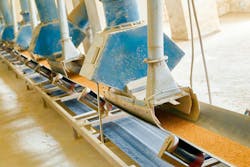
Grain handling facilities demonstrate how this blueprint of selecting the right hardware, materials and lubricants, and physical barriers can work in practice.
Grain dust is fine, abrasive and persistent. Equipment runs long hours with little tolerance for failure. Designers rely on use of enclosed conveyors, sealed bearings, dust-tight motor housings and careful component placement away from direct material flow. These decisions preserve motion accuracy and reduce unplanned downtime.
Designing motion systems for dust-heavy industrial environments is not about relying on a single protective feature. It is a layered strategy built on durable hardware, smart material selection, controlled lubrication, physical barriers and intentional geometry. When these elements work together, linear and rotary motion systems maintain precision and reliability, even in the harshest industrial environments where dust is simply part of the job.
This article was written and contributed by Eric Willems, a Product Specialist for Grain Handling Direct.
About the Author
Eric Willems
Product Specialist, Grain Handling Direct
Eric Willems is a Product Specialist for Grain Handling Direct, a supplier that specializes in grain handling equipment and systems. Eric has more than 10 years of expertise in commercial and farm-scale grain storage and handling systems. He supports customers through every stage of project design, selection, and implementation. Drawing on hands-on experience with grain bins, dryers, material handling equipment, and site layout optimization, Eric provides clear technical guidance that improves reliability, safety, and long-term ROI (return on investment) for growers.