Beyond the Seal: A Systems-Approach to Eliminating Hydraulic Leakage
What You'll Learn
- How using a systems approach that takes several factors into consideration can improve hydraulic sealing and thus reduce system leaks.
- The importance of balancing lubrication and leakage when selecting hydraulic seals.
- What new seal technology developments are doing to help minimize hydraulic system leaks.
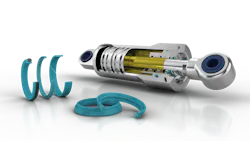
In the fluid power industry, external leakage is a costly and persistent challenge that can severely impact reliability, reputation and revenue for hydraulic component manufacturers and original equipment manufacturers (OEMs). Leakage can lead to equipment downtime, reduced operational efficiency and increase environmental contamination, which directly affects profitability and customer satisfaction.
When leaks occur, the seal itself is often blamed since seals are the components tasked with keeping fluids contained. However, leakage is rarely linked to a single cause and typically results from a complex interplay of factors within the hydraulic system.
Such contributors could include improper system maintenance, ingress of contamination, incorrect seal selection and extreme or unintended operating conditions.
Another overlooked contributor that can lead to leakage is the design of the entire sealing system and how the combined sealing components interact with each other. To truly address leaks, engineers should move beyond a narrow focus on individual parts and adopt a “systems-thinking” approach.
At its core, effective leak prevention involves understanding and optimizing the dynamic interactions between three critical elements: the counter surface, the fluid and the sealing system.
This article delves into the root causes of external hydraulic leakage in linear applications, examines the interconnected factors that contribute to cylinder rod sealing performance, and explores advanced technologies and best practices for creating robust, leak-free systems.
By shifting the focus from isolated components to a more holistic system design, engineers can achieve more reliable, efficient and durable hydraulic systems.
Understanding the Interplay of Counter Surface, Hydraulic Fluid and Seals
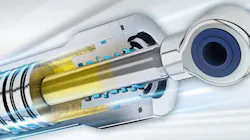
Preventing hydraulic leakage in a linear rod application requires analyzing the sealing system, viewing it as a dynamic interaction between three key components — the counter surface, the hydraulic fluid, and the seal.
1. The Counter Surface
The substrate, coating and surface finish all influence how well the sealing system functions. The substrate must have the right material composition and sufficient hardness to support the coating and handle the applied loads.
Chrome is a widely used coating to provide the necessary hardness and corrosion resistance; however a REACH directive designating hexavalent chrome (Cr6) as a substance of very high concern (SVHC) has led to the adoption of alternative coating materials. Surface finish parameters should also be optimized to strike the right balance between sealing and maintaining lubrication.
2. The Fluid
The hydraulic fluid acts as the medium that enables power transmission, but it also aids in heat transfer, contamination control, corrosion prevention and lubrication. Due to its multifunctionality, the various fluid properties — such as viscosity index, temperature range, compatibility with sealing materials and cleanliness — are vital to sealing performance.
Contaminated or degraded fluids can damage seals, while lack of temperature or chemical compatibility of the fluids can accelerate wear and lead to premature failure. Furthermore, the viscosity of the fluid can directly affect the hydraulic fluid film of the sealing system which is a key factor for effective seal performance.
3. The Seal
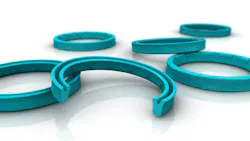
The seal geometry and seal material are critical design factors. A well-designed seal must not only prevent leakage and contamination ingress but also minimize friction and wear to ensure long product life. In linear applications, multiple components (seals, wear rings, wipers) are used in combination to achieve the performance requirements of the system, so how these sealing solutions are formulated and designed is also critically important.
Suppliers like Trelleborg Sealing Solutions have proprietary materials, and can create custom seal designs and unique sealing solutions that maximize durability and performance.
Failing to address any one of these elements can potentially destabilize the entire system. A perfectly designed sealing system won’t perform as intended if the hydraulic fluid degrades the seal material or if the counter surface finish is too rough, causing excessive wear.
Conversely, a surface that is too smooth can reduce the fluid film needed for lubrication, leading to increased friction and heat buildup. The success of the entire system depends on optimizing the interaction between these components, making it important to partner with a supplier that carefully considers all aspects of leak prevention.
Surface Finish: Looking Beyond Ra
One factor that is especially critical for maintaining a proper lubrication film is the surface finish of the counter surface. Many engineers rely solely on the roughness average (Ra) to assess the overall surface texture and quality. While Ra provides a general indication of surface smoothness or roughness, it does not reveal the full picture of surface characteristics.
Two surfaces with identical Ra values can perform differently under dynamic sealing conditions. To optimize sealing performance, additional surface parameters must be considered — parameters including mean roughness depth (Rz), maximum roughness depth (Rmax) and the relative material ratio (Rmr). These additional values have further importance given the growth of chrome alternatives.
- Rz: Rz is an average roughness value like Ra but differs from Ra in that it measures the average vertical distance between the highest peaks and lowest valleys on a surface over multiple sampling lengths.
- Rmax: This parameter measures the maximum vertical distance between the highest peak and the lowest valley on a surface. High Rmax values indicate extreme irregularities that can damage seals, while low values may lead to insufficient lubrication.
- Rmr: Rmr provides a more nuanced view of surface contact, indicating the percentage of material support at a given depth. Ideal Rmr values typically range between 50-70%, ensuring adequate seal support while allowing for proper lubrication.
Surfaces with sharp peaks or low Rmr values can create high contact stresses leading to premature wear while excessively smooth surfaces may reduce lubrication efficiency. By evaluating and optimizing these parameters, engineers can create counter surfaces that enhance seal performance and durability.
The Fluid Film Challenge: Balancing Lubrication and Leakage
One of the most critical challenges in hydraulic sealing is managing the fluid film — a delicate layer of oil that reduces friction and wear — while preventing external leakage. Striking the right balance in fluid film thickness is essential for long-term system performance.
The fluid film operates differently during the extension and retraction strokes of a hydraulic cylinder:
- Extension stroke: During this phase, a thin microlayer of oil must pass under the seals to maintain lubrication and reduce friction. If the film is too thick, excess fluid can escape resulting in external leakage.
- Retraction stroke: The sealing system must recover as much of the fluid film as possible to prevent leakage while maintaining the lubrication needed for smooth operation. If the film is too thin, it can lead to increased friction, heat build-up and accelerated seal wear.
The goal is to achieve a balance where the amount of fluid transported out of the system equals the amount returned. However, this balance is influenced by several factors, including cylinder speed, pressure, operating conditions, surface finish and the fluid itself.
Engineers account for these variables by recommending optimal surface roughness parameters, developing high performance materials and designing sealing geometries optimized for specific applications.
Advanced seals, such as those with back pumping or venting capabilities, can help manage fluid transport and maintain the necessary lubrication without excessive leakage.
Advanced Sealing Technologies for Leak Prevention
Modern sealing technologies also incorporate innovative design features to tackle leakage challenges more effectively. Trelleborg offers complete sealing system solutions with harmonized materials and synergized geometric combinations. Some of the most impactful advances include:
Back-Pumping Seals
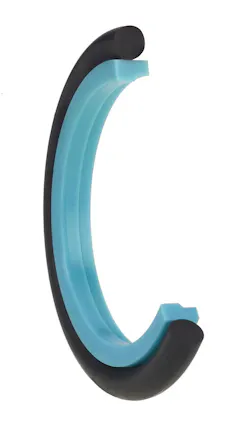
Back-pumping seals like Trelleborg’s Zurcon U-Cup RU9 or the Turcon Stepseal 2K are specifically designed for applications where eliminating all fluid transport during the extension stroke would cause excessive wear. These seals allow a controlled microlayer of fluid to pass through for lubrication while actively returning the fluid during the retraction stroke. This technology ensures a balance between lubrication and leakage control, improving both performance and longevity.
Pressure Relief and Venting Solutions
Pressure traps are a common issue in hydraulic systems, particularly in tandem sealing arrangements. Trapped pressure between seals can exceed system pressure, leading to seal extrusion, wiper failure or system damage. Advanced pressure relief solutions, such as buffer seals with integrated check valves, automatically relieve trapped pressure, protecting the system. Venting wipers are another effective tool, allowing trapped pressure to escape while preventing dirt and moisture from entering the system.
Partnering for Reliability: A Systems-Approach to Seal Design
Leak prevention is not about a single product — it’s an ongoing engineering discipline. Achieving long-term reliability requires balancing competing factors: friction versus sealing ability, speed versus fluid viscosity and surface finish versus seal material. By adopting a systems-thinking approach, engineers can identify and prevent the root causes of leakage.
Companies like Trelleborg specialize in creating tailored solutions that optimize every aspect of hydraulic systems. From advanced materials to customized geometries to application-specific designs, working with the right supplier can offer deep expertise to help maximize reliability and performance.
This article was written and contributed by Trevor Combs, Global Technical Manager for Off-highway, Trelleborg Sealing Solutions.
About the Author
 Trevor Combs
Trevor Combs
Global Technical Manager for Off-highway, Trelleborg Sealing Solutions
Trevor Combs is Global Technical Manager for Off-highway at Trelleborg Sealing Solutions. Trevor has been with Trelleborg for 15 years as an Applications Engineer/Manager and now as the Global Technical Manager for Off-highway. He holds a master's in engineering and technology management from Portland State University and a bachelor's in mechanical engineering from George Fox University.