Digitalization and Software Control Among Tech Trends at CONEXPO
Key Highlights
- Parker Hannifin’s Tim LaCrosse is looking forward to seeing advancements in digitalization and software control for hydraulics among the technologies on display at CONEXPO 2026.
- These and other trends likely to be highlighted at the show fit in with the construction equipment industry’s desire to improve productivity, efficiency and reliability.
- Rising use of steer-by-wire systems and artificial intelligence is expected to influence hydraulic system designs for construction equipment in the years to come, and recent advancements in these areas are likely to be showcased at CONEXPO.

There are a number of technology and industry trends shaping the design of hydraulic systems for use in construction equipment which will be on display at CONEXPO-CON/AGG 2026 — the year’s largest event for the construction industry.
For Tim LaCrosse, Business Development & Application Engineering Manager at Parker Hannifin, key trends he is looking forward to seeing showcased at the event include advancements in digitalization and software control for hydraulics. Both fit in with continued efforts he sees by OEMs to improve the productivity and reliability of their machines.
Visit our CONEXPO 2026 page for more Q&As with hydraulics companies exhibiting at the event as well as news and other content related to the year's biggest event for the construction equipment industry.
In terms of software, he noted that when intelligently implemented it can bring new life into older yet still reliable technologies to bring about new capabilities.
In this interview with Power & Motion, LaCrosse offers his insights on these and other trends he sees within the construction equipment industry which he expects to see on display at CONEXPO 2026 as well as how he sees hydraulic technologies for this sector continuing to evolve.
*Editor’s note: Questions and responses have been edited for clarity.
Power & Motion: What are some of the technologies or other aspects you are most looking forward to seeing at CONEXPO 2026?
Tim LaCrosse: At past shows, electrification has been at the forefront of all the technologies, and I’m sure it’ll be prevalent at the component and systems integration level, so that will still be a focus. I’m very interested in seeing digitization and digitalization; I think that will be pretty prevalent at the show along with autonomy, software integration into systems, and just component and system technology in general.
When it comes to the OEMs, what comes to mind and what I hear a lot is machine productivity and reliability, those still dominate along with efficiency, and we’re playing in all of those attributes at the system and component levels from a design perspective. I think there will be a lot of all of that [on display at CONEXPO 2026].
Power & Motion: You mentioned digitization and digitalization. For those who may not be as familiar with them, how would you differentiate between those two terms?
Tim LaCrosse: They’re very broad terms that mean different things to a lot of different people. In our industry, digitization is what happens at the component level, where you integrate electronics — such as sensors and electrohydraulic-type attributes — at the component level and then digitalization is using the information available at the component level to digitalize your system and provide digital solutions to end customers.
At the OEM level they may view it as IoT (internet of things) types of technologies or a technique to allow autonomy, so it’s very broad how [these terms] are used in the industry.
Power & Motion: What do you think will be some of the biggest themes or technological trends exhibited at this year’s show? Are there new trends entering the hydraulics and construction equipment industries that are likely to be showcased, or will it be some of the same trends we’ve seen over the years such as automation and electrification?
Tim LaCrosse: I think electrification is important, albeit the adoption rate has slowed; there are certain markets where that adoption continues to happen and it makes sense, so I think you’ll still see a lot of that [electrification technology].
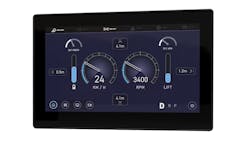
I think the other technology trend that you’ll see is the utilization of software to drive the hardware. That is an area that we [Parker Hannifin] are focusing on, and when you think about how to use software intelligently you can use it to give a breath of new life to older technologies; some of those older technologies are pretty reliable and so you can give them a new life with software integration and control to make them more efficient.
On the reliability side, and we’ll have a focus on this at the Parker Hannifin booth, you can’t forget about fluid conveyance because leak-free systems are still a focus and they need to be addressed. I still see it in many systems today and many customers come to us with leaking hydraulic systems because they’re not designed properly, they don’t have the right components, torquing methods aren’t as stringent as they probably should be. So, the reliability of those systems from a fluid conveyance [standpoint] is important as well as the filtration aspect. A lot of failures in hydraulics still happen because of contamination concerns and if you don’t have the right filtration, that’s a problem. I think reliability will be key along with productivity and efficiency.
Power & Motion: Are there any market factors you see driving those efforts to improve reliability and productivity?
Tim LaCrosse: They’ve always been important, and in general improving productivity of equipment is important to just about any OEM because downtime is expensive. And so, any time you can do that [improve productivity and reliability], it has an impact for OEMs.
Power & Motion: Are you able to share what themes or technology areas Parker Hannifin will be showcasing at its CONEXPO booth this year?
Tim LaCrosse: We’ll have six focus areas. We’ll showcase our electrification portfolio and have an area focused on alternative fuels and alternative fuel technologies. At the systems level we’ll have digitalization, an area focused on implement control systems, steer-by-wire and brake-by-wire, and a specific market focus on compact construction equipment. And across all of those technologies, functional safety and safety will be a theme along with the reliability piece [for] fluid conveyance.
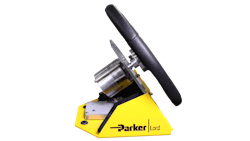
An area we see a lot of interest in is steer-by-wire and brake-by-wire technologies, and we’ll have a focus on that. If I look back, we have been talking steer-by-wire for a long time. I think we’re at a point of inflection in the marketplace where it is becoming pretty commonplace, we’re seeing a lot of OEMs design it into their systems. I think there’s a couple of reasons for that. You can get noise out of the cab by removing hydraulics from the cab. You tend to be able to reduce costs because you don’t have all the hydraulic [components] in the cab and the costs associated with them. Steer-by-wire is just a controller and input device.
I think the other thing is as more OEMs move towards autonomy, steer-by-wire and brake-by-wire is an enabler for going that direction. There are a lot of safety concerns with steer-by-wire, you have to really understand what you’re doing from a design perspective and some of the [safety] legislation, including cybersecurity, but I think that will be big focus because we do see a lot of activity in that area.
Power & Motion: You said Parker will have a focus on compact equipment. Is that an area of the market the company is seeing some growth or opportunities? What is prompting the focus on that segment of the construction equipment industry?
Tim LaCrosse: That continues to be an area of growth for us. We continue to see more and more OEMs entering that market. Compact equipment [is typically] 75 hp and up, and there is this other segment sometimes called subcompact or mini which is below that 75 hp (55 kW) threshold. There are a lot of new challenges for OEMs designing and developing equipment in that area; that area continues to expand quite quickly, and we are helping a lot of OEMs [in that space] so we will have a focus on that at CONEXPO 2026.
Power & Motion: What are some of the features or capabilities OEMs in the construction equipment market are looking for currently from their hydraulic components and systems?
Tim LaCrosse: More efficiency is certainly an area, whether it’s a hydraulic system, a hybrid system or a fully electrified system. We’re starting to see some [growing] interest in hybrids. I think there’s a spot for hybrids and there will be a lot of customers looking for that technology and will have a technical presentation on hybrid technology at the [National Fluid Power Association] conference. I would say those are two that would stick out.
Power & Motion: How do you see the use of hydraulics in construction equipment continuing to evolve in the next 5 years?
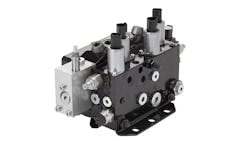
Tim LaCrosse: I think we’ll see continued integration of software to control hardware; that will continue to grow in terms of system integration of electronics and electrohydraulic systems with the hydraulic componentry and controls. Steer-by-wire, brake-by-wire [and] this path to autonomy will continue to play out over the next several years. When you think about those things, OEMs will really have to consider cybersecurity and how to make sure their systems are safe and reliable. Functional safety across the board will be more prevalent.
If we look at electrified systems, there’s some development around noise that needs to happen and lower noise components.
There is also artificial intelligence (AI). I’m sure there will be some [developments related to that] at CONEXPO, but I think there will be a lot of future work done in that area. I know it’s an area we’re looking at, so I’m sure there will be a lot of technology development around AI and AI implementation into hydraulic and electric control systems. In general, I would say there is kind of a black art to some of this hydraulic control system design, and I think AI will allow faster iteration of development of stable and efficient control systems in the future, so I definitely think it will have a part to play.
About the Author
 Sara Jensen
Sara Jensen
Executive Editor, Power & Motion
Sara Jensen is executive editor of Power & Motion, directing expanded coverage into the modern fluid power space, as well as mechatronic and smart technologies. She has over 15 years of publishing experience. Prior to Power & Motion she spent 11 years with a trade publication for engineers of heavy-duty equipment, the last 3 of which were as the editor and brand lead. Over the course of her time in the B2B industry, Sara has gained an extensive knowledge of various heavy-duty equipment industries — including construction, agriculture, mining and on-road trucks —along with the systems and market trends which impact them such as fluid power and electronic motion control technologies.
You can follow Sara and Power & Motion via the following social media handles:
X (formerly Twitter): @TechnlgyEditor and @PowerMotionTech
LinkedIn: @SaraJensen and @Power&Motion
Facebook: @PowerMotionTech