From the Editor’s Desk: Vanguard Rental eSummit Provides Look into the State of Electrification
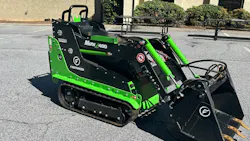
It’s fall travel season in the B2B world which means I was on the road again last week attending another industry event, this time the Vanguard Rental eSummit.
Hosted by Briggs & Stratton’s electrification brand Vanguard, the event brought together OEMs, rental leadership, industry associations, technology suppliers — including several fluid power related companies (see sidebar below) — a few of us from the media, and other decision makers from the rental industry to discuss the state of electrification within the sector.
For me, the Vanguard Rental eSummit provided an opportunity to hear some new perspectives on electrification, such as the need to include dealers in the equation when pushing electrification to the market, while also helping echo many of the things I’ve heard over the years from those developing electrification solutions.
But what I think stood out to me most was the insight the rental industry itself can provide on what is happening currently within the electrification space and what is yet needed to enable its further adoption.
Fluid Power Partnerships Aid Electrification System Development
As Briggs & Stratton expanded its electrification offering, it established the Vanguard Battery Technology Partner Program to help OEMs with their electrification development efforts. Several fluid power companies, particularly distributors, have joined this program to aid the creation of full system solutions which combine fluid power and electric technologies.
Read the content below to learn more about the program and how the fluid power industry is involved with it:
Technology Partnerships Enable Optimized Pairing of Batteries and Fluid Power Systems
Briggs & Stratton Adds New Fluid Power Partners to Electrification Network
What the Rental Market can Teach us About Electrification Adoption
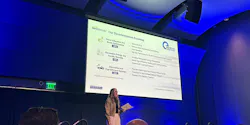
So why focus an electrification event on the rental sector? This was something I was wondering as well but was soon answered by the first keynote speaker Katie Leone, sustainability and social impact director at Herc Rentals, when she said the rental industry plays a critical role in the adoption of new products, including electrification.
“We have a wide range of diverse customers that we have relationships with, and we have a wide range of OEM partners that we work with, and so we can really be that connective tissue that powers adoption,” she said. “We [the rental industry] provide a real platform, a real way to get to market at scale and to test and pilot and bring new things online to a new audience.”
Because of the range of machines and applications rental companies work with, they can gain insight into the duty cycles and job sites in which electrification makes sense that can then be shared with OEMs and technology suppliers so they are applying electrification where it makes sense.
And this is something that continues to be emphasized in conversations about electrification, the need to use it when and where it makes sense as it is not the right fit for every machine type or job site.
Where once it felt like everyone was trying to electrify everything, equipment manufacturers in construction and other industries have realized that is not the best path to take. Instead, many are now focusing on determining the best use cases for electrification and developing solutions that meet specific application needs.
Leone probably put it best when she said enthusiasm isn’t enough and that “responsible adoption [requires] thinking about all of the analytics and data.”
With that analytics and data, equipment manufacturers can be better assured whether or not an electrification solution is a right fit for a given application.
Rental Provides a Pulse on End User Requirements
The rental industry can also offer insight into how much demand there is in the market for electrification solutions from a wide array of end-use customers — from home owners to business professionals and everyone in between.
As one summit attendee from a turf care OEM told me, the company is just not seeing demand yet from customers for electric-powered machines. The OEM has started developing some options where it makes sense but is also not making a large investment in electrification until there is market demand to support it.
Part of the reason for this lack of demand is the fact that many rental customers are going to choose the option with which they are familiar. If presented with a gas engine-powered machine and a battery-powered option, they are likely going to go with the gas engine version because they know how to use that machine.
It was noted by a rental company representative that he’s found some older customers actually prefer the battery-powered options because they find them easier to use — typically they just have to push a button to turn the machine on instead of using a pull chord to turn on a gas engine version which can be physically difficult.
But in general, he agreed with the turf care OEM that demand for electric solutions from customers remains low. A reason he noted is the fact the battery-powered option is likely going to require extra supplies such as an additional battery and a charger. For the gas engine version, only a gas can may be required which is something the customer likely already has.
The important takeaways here: ease of use and potential additional required equipment are key factors to consider when developing electric machines.
Probably not new insights for anyone working within the electrification space, but still important aspects to keep in mind throughout the development process to ensure end users will actually want to utilize the machinery you’re developing.
Overall, I think what the rental industry can teach us about electrification is that it has to make sense for those that will be using the machines. And I think that is where the heavy equipment industry is finally at today, whether serving customers in rental or other markets.
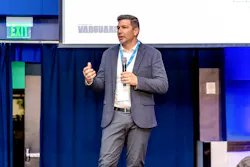
As David Frank, senior vice president and president of electrification at Briggs & Stratton, stated in his speech at the event, ultimately the goal is to determine “what problem are we solving for our customers.” And from there, determine if an electric, traditional internal combustion engine or hybrid solution is the best fit.
Like any industry event, there was too much information collected to put into a single piece of content. And I’ll certainly be sharing more in the future, including some new application stories involving fluid power technology in the electrification space.
However, I’ll leave it at this — it was evident from the presentations and conversations had at the Vanguard Rental eSummit that electrification is still an important development area for many, but it is critical to ensure it is being employed where it makes the most sense.
About the Author
 Sara Jensen
Sara Jensen
Executive Editor, Power & Motion
Sara Jensen is executive editor of Power & Motion, directing expanded coverage into the modern fluid power space, as well as mechatronic and smart technologies. She has over 15 years of publishing experience. Prior to Power & Motion she spent 11 years with a trade publication for engineers of heavy-duty equipment, the last 3 of which were as the editor and brand lead. Over the course of her time in the B2B industry, Sara has gained an extensive knowledge of various heavy-duty equipment industries — including construction, agriculture, mining and on-road trucks —along with the systems and market trends which impact them such as fluid power and electronic motion control technologies.
You can follow Sara and Power & Motion via the following social media handles:
X (formerly Twitter): @TechnlgyEditor and @PowerMotionTech
LinkedIn: @SaraJensen and @Power&Motion
Facebook: @PowerMotionTech