4 Trends Impacting Off-Highway Equipment in 2026
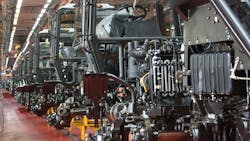
Construction, agriculture and other mobile off-road equipment designs are being shaped by a wide range of industry trends and market factors.
Why This Matters
Understanding the trends shaping the mobile off-highway equipment industry is important to both OEMs and their technology suppliers, including those developing fluid power and other motion systems. Gaining insight into these trends is critical to ensure components, systems and machines continue to meet customer requirements and the needs of the applications in which they'll be used.
To help OEMs and technology suppliers in this sector better understand some of these trends, the Association of Equipment Manufacturers (AEM) has pulled together insights from its subject matter experts on the four key trends expected to have the most impact on the mobile off-highway equipment industry in 2026.
1. Farmers Want to Maintain the Status Quo While Managing Costs
AEM Senior Director of Agricultural Services Austin Gellings said that after years of volatility in the agriculture sector — due to lower commodity prices, higher input costs and supply chain disruptions — farmers are focused on controlling costs and making incremental improvements.
They are looking to maintain the status quo by finding ways to enhance their operational efficiency and productivity while at the same time preserving capital. This means they are not likely to be making large-scale investments in new equipment.
Instead, Gellings said farmers will continue to leverage data for insights into their operations so they can better determine areas in which they may be able to cut costs. He said this means software solutions, connectivity, and data integration will be increasingly important tools for OEMs and their suppliers to provide.
Gellings also noted that retrofitting older agricultural equipment with modern technology is another way he sees farmers improving their capabilities in a more cost-effective manner. Adding GPS, variable-rate technology or aftermarket sensors to machinery they already own enables farmers to employ tools aimed at improving how they use their equipment without having to invest a lot of money in a brand-new machine.
For OEMs and their suppliers, this means having retrofit kits and aftermarket products available to extend the useful life of farmers’ machinery.

2. Enhanced Connectivity for Improved Machine and Operational Insights in Construction Operations
Data has become a critical operational tool for the construction industry to help ensure work is completed accurately and on time. As Dormie Weber, AEM Construction Services Manager, points out, the industry is moving beyond employing telematics, sensors, and devices that provide basic machine health and location information.
While these tools are still important, she said embedded connectivity in machine operating systems is now the focus to enable automated alerts, more intuitive dashboards and an overall better user experience for operators and machine owners. All of this helps to provide productivity gains, real-time decision making and uptime.
With this increase in connectivity Weber noted the need to ensure all machine systems speak the same language — typically achieved through use of communication protocols. And not only is this important in a single machine but also across fleets, assets and platforms.
As connectivity continues to grow in this sector, it will be important for hydraulics, pneumatics and other technology suppliers to ensure their products are capable of working within these connected ecosystems as well. This means enabling data collection capabilities as well as the ability to work with the communication protocols being employed by construction equipment manufacturers.
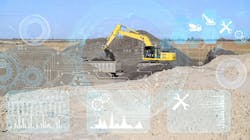
3. Using AI and Automation to Overcome Labor Gaps in Equipment Manufacturing
The skilled labor gap continues to present challenges for manufacturers of all types, including those in the mobile equipment industry. According to AEM’s Julie Davis, Senior Vice President of People Strategy, the rising uptake of automation and artificial intelligence (AI) will be key to addressing these challenges.
She said many manufacturers are now moving on from pilots to employing these technologies in their daily operations to help increase their throughput and quality. However, this does not mean the human element is not still an important part of the equation because they are — it’s just that their roles are evolving to conduct more oversight, troubleshooting and data-driven decision-making said Davis.
This means it will be necessary for companies to focus on upskilling their talent to prepare them for these new roles. In addition, manufacturers will need to employ better methods of transferring knowledge from tenured personnel — such as digital coaching and other tools — so it is not lost while also ensuring younger generations in the industry have clear pathways to continue growing in the industry.
Essentially, Davis said it will be critical to treat workforce and technology as a single strategy.
Watch our below interviews with John Deere to learn how implementing automation in its manufacturing facilities helped make them more productive and efficient.


4. Government Spending and Regulations
Both government spending and regulatory policies will be important aspects to pay attention to in 2026.
In terms of spending legislation, many in the mobile equipment industry — particularly the construction equipment segment — will be watching how the 2026 surface transportation reauthorization pans out. This legislation provides funding for a number of surface transportation programs in the U.S., including the building and repair of roads, bridges and other infrastructure used to move people and goods which relies on the use of construction equipment.
If funding for infrastructure projects is robust, as was seen with the Infrastructure Investment and Jobs Act of 2021, it means there will be more construction projects and thus demand for the equipment used in these projects.
Read the Association of Equipment Manufacturers’ full article from which this piece is adapted for more insights from the association’s subject matter experts.
Besides infrastructure funding, Kate Fox Wood, AEM Vice President of Federal Affairs, said there are many policy details that could be included in the bill which impact the equipment manufacturing sector. For instance, it could also include stipulations related to the ongoing issue of right-to-repair or Buy America provisions intended to promote the purchase of equipment and other goods used in projects from domestic companies.
Depending on what the final bill entails, Wood said it could bring opportunities for the equipment manufacturing sector or regulatory headwinds, making it an important government spending bill to monitor in 2026.
The Trump Administration’s efforts to pursue regulatory pullbacks will also be important to monitor as these can have an effect not only on how machinery and their systems are designed but also the facilities in which they are manufactured.
AEM’s Jason Malcore, Senior Director of Safety & Product Leadership, pointed to several rulemakings the administration wants to pull back that could impact the equipment manufacturing industry, including several at the Environmental Protection Agency:
- reassessment of the 2009 Endangerment Finding for Greenhouse gases (GHG),
- eliminating PFAS reporting requirements for imported articles,
- eliminating large swaths of its GHG Reporting Program, and
- re-examining its approach to chemical risk evaluations under the Toxic Substance Control Act (TSCA).
Malcore said the administration’s goal is to reduce regulatory and economic burdens on various industries.
What trends are you watching in 2026? Are there industries or market sectors you see providing new opportunities this year? Take our quick 4-question survey to offer your thoughts!
About the Author
 Sara Jensen
Sara Jensen
Executive Editor, Power & Motion
Sara Jensen is executive editor of Power & Motion, directing expanded coverage into the modern fluid power space, as well as mechatronic and smart technologies. She has over 15 years of publishing experience. Prior to Power & Motion she spent 11 years with a trade publication for engineers of heavy-duty equipment, the last 3 of which were as the editor and brand lead. Over the course of her time in the B2B industry, Sara has gained an extensive knowledge of various heavy-duty equipment industries — including construction, agriculture, mining and on-road trucks —along with the systems and market trends which impact them such as fluid power and electronic motion control technologies.
You can follow Sara and Power & Motion via the following social media handles:
X (formerly Twitter): @TechnlgyEditor and @PowerMotionTech
LinkedIn: @SaraJensen and @Power&Motion
Facebook: @PowerMotionTech