Automation Systems are Becoming Smarter, More Efficient, and More Adaptable
Key Highlights
- Georges Mankarious from Emerson discusses how the automation industry is moving toward creation of smarter, more efficient and more adaptable systems to help industrial operations remain productive and competitive.
- He sees both pneumatic and electric actuation technologies continue to play important roles in automation, with many systems now becoming a hybrid of both technologies.
- At Automate 2026, he expects AI-enabled automation and smart machine diagnostics to be key themes and is interested in seeing advancements in humanoid robots.
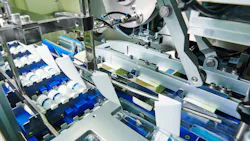
Automation uptake continues to grow within industrial applications such as manufacturing. In conjunction, the capabilities of automated systems and machines are increasing to meet evolving industry requirements.
According to Georges Mankarious, Segment Marketing Director, Factory Automation at Emerson, the industry is continually moving toward smarter, more efficient and more adaptable automation systems.
This is enabling systems to provide better performance data for predictive maintenance, help machine owners achieve sustainability goals as well as allow for more flexibility to adapt to changing market conditions.
Mankarious spoke with Power & Motion about how he is seeing these capabilities come to fruition in automation systems. He also discussed the equal role he sees pneumatic and electric actuation technologies playing within automation, and the increasing use of hybrid systems that use both, as well as the key themes he expects to see on display at Automate 2026.
*Editor’s note: Questions and responses have been edited for clarity.
Power & Motion: What is the current state of the industrial automation market? Are people still investing in automation technologies?
Georges Mankarious: Short answer, yes, we are seeing investments in the automation technology market in general, despite uncertainties in the economy right now with global conflicts and trade policies.

We still see some strong investments in factory automation, industrial automation across several sectors. What we also tend to see is that smart manufacturing is really just becoming a reality for most manufacturers right now, especially in the U.S. with the reshoring and reindustrialization activities of critical sectors. A lot of companies are coming back to the U.S. to be as close as possible to customers, they're driving investments into the market. With that, we're seeing a lot of shortage of skilled labor and also supply chain challenges to maintain that regional stability and resiliency.
There are a few other key trends I would say are driving some of those investments, for example, productivity improvements, safety and efficiency improvements, because at the end of the day, our customers want to remain competitive in the market. So, it's more of ‘how do we actually use automation to our own benefit to compete.’ This is all really accelerating investments.
Our customers are increasingly looking at optimizing their operations — so, how do we reduce unplanned downtime? How do we just make sure that throughput is at a maximum?
One last trend that I can think of is the move towards smarter and more connected automation ecosystems. Overall, our customers are looking to not only improve machine performance, but also expand [it across] their plant.
Power & Motion: Are you able to expand on that. What would those smarter automation systems look like?
Georges Mankarious: It really all comes down to data. So, how do we get the right data out of a machine, and how do we make the right decision based on that specific machine throughout the full [production] process. In packaging, for example, we're looking at very high speed packaging or bottling that requires very specific synchronization timing, very specific and accurate filling, and so on. That kind of data is very important at the machine level, and then it impacts the full process at the end of the day, so making sure that everything is linked together with the right automation system is critical at this point.
Power & Motion: Are there specific industries or applications where you are currently seeing more interest in automation solutions than others? If so, what are those industries or applications and why are they investing in automation?
Georges Mankarious: We do see a lot of interest across several industries, especially the ones that are reshoring back to the U.S. To name a few, you have packaging, material handling, warehousing, logistics, life sciences and medical. Needless to say, semiconductors is obviously one of the big industries as well in the U.S. with all the AI (artificial intelligence) demand that is shaping the current market. So, that's just to name a few.
All these industries are under pressure to increase their throughput, make sure that the quality is at a maximum, and just address all the labor challenges that they have, and that's why they really try to get into automation to address those challenges. At the end of the day, they want to be as flexible as possible in today's market, as resilient as possible in order to answer demand shifts that could happen anytime. I’ll give you an example; in packaging and material handling, manufacturers are looking for fast changeover, modular machines that are easily scalable to make sure that they can adapt to what's coming in the future.
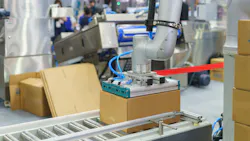
Power & Motion: Are pneumatics still used for automation systems, or are you seeing a greater use of electric actuation technologies in today’s systems? Or are both technologies used fairly equally?
Georges Mankarious: I would say they're both really important right now. There is no technology that is needed more than the other. The way I even see it is that it's becoming more and more hybrid in the market — how do we leverage both technologies to maximize the performance in the market right now?
At the end of the day, the choice of the technology relies heavily on the application requirements, but also the design factors of the specific machine. So, is a specific speed, a specific force, or precision required? What is the environment that machine sits in? And then obviously total cost of ownership and ROI (return on investment).
For example, pneumatics will remain highly effective and cost-effective for applications that require higher force, quick speeds, and also just a simple take me from point A to point B [movement]. [Pneumatics are good for] pretty durable and robust applications, and at the end of the day, don’t break your bank as an initial investment.
Electric actuation, on the other side, has a lot more advantages in terms of precision and accuracy. You want to move from a very precise point A to point B to point C, even at micron levels, it is easier to program. You get also better data, feedback out of an electric actuator, and overall it's just an overall kind of advanced motion control [option]. But the reality is it's no longer a question of either or as customers are choosing both technologies right now to maximize performance.
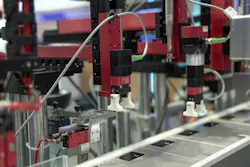
Power & Motion: What are the features or capabilities customers are currently looking for in automation solutions?
Georges Mankarious: I think in today's world, the number one capability or keyword that [manufacturers are] looking for is resilience. They're dealing with a lot — skilled labor shortages, market volatility, trade conflicts, tariffs, supply chain challenges — so automation is the solution for these challenges that will [help manufacturers] maintain relevance in the market and also keep them competitive.
They're looking for solutions that are modular, scalable, and easier to integrate into their existing systems without needing an in-house team of specialized software engineers or controls engineers. Anything that could be easily plug and play, and connected through universal protocols, OPC UA or IO-Link for example; these things will enhance their installation time and reduce overall downtime.
They also look for total visibility and transparency. And that goes back again to the data, making sure that they have the right data, so they can make the right decisions behind it. It's easy to get data at the end of the day, but it has to be the right amount or the right data set for you to make the right decisions to do the any kind of predictive maintenance. Downtime is expensive for most of our customers, so how can they reduce unplanned downtime, but also make sure that they predict maintenance so they know exactly when to perform maintenance.
Finally, I think energy efficiency and sustainability, that's also a key term that keeps [coming up] with our customers. It is a key priority for us right now, and in many industries.
Power & Motion: What challenges still exist when developing automation solutions, or related to uptake of automation solutions? What could help overcome these challenges?
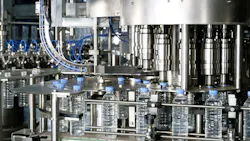
Georges Mankarious: The good news is we do see the investments in the market, and that there are a lot of advancements in automation. But there are still hurdles in adopting automation, especially if you are a mid- to small-size company. As I mentioned before, the skilled labor shortage and lack of any kind of in-house specialty or expertise can slow down this adoption. So again, it goes back to making sure that your technologies easily plug and play, are low code/no code, anything that a mid- to small-size company can actually leverage and just install by themselves or will require very minimal effort to do so.
Second, I think a lot of the products that we see are not necessarily greenfield, you're modernizing some of the legacy infrastructure, so you need to make sure that the systems are interoperable and easily transition to a newer infrastructure as needed, because a lot of the customers look to retrofit instead of ripping and replacing.
The third one is, how do they [manufacturers] balance the initial investments in automation with maintaining profitable growth, especially in this market right now. That's where we usually have to shift the conversation from an initial investment to more of a total cost of ownership or an ROI discussion. So, we can provide the right digital tools for that, like an ROI calculator for a specific application.
Power & Motion: What trends or technologies are you most looking forward to seeing at Automate 2026? Are there any new trends entering the market you expect to see showcased?
Georges Mankarious: I am very excited to be attending Automate this year, to be honest. And I think there will be a lot of talk around AI-enabled automation in general, smart machine diagnostics; I think these will be key themes in this year's trade show.
I think as AI continues to be the biggest talking point in this industry, I think we're yet to unlock more use cases around it, so that's going to be something that we'll keep an eye on for sure. How do they use AI with supply chain, quality control or overall process optimization?
I think we're also going to see a lot of continued focus on agility and flexible automation and the digitalization of automation generally. How do we also increase efficiency and adapt quickly to the changes that we see in the market? So it goes ties back to the resiliency piece that we see right now, specifically this year.
Energy efficiency I think will keep coming up for the next few years as well. I'm also very curious to hear more and see more about the Humanoid Robot Pavilion. That's something that I'm pretty curious about. It's clear that there is a trend towards [those]; I'm curious to see how a humanoid or a general purpose mobile robot will be used in the industrial space.
Power & Motion: Do you see pneumatic or electric actuation technologies being utilized in those humanoid robots in some capacity? What opportunities do you potentially see in that part of the market?
Georges Mankarious: I think it will definitely be more electric than pneumatic, just from an easier access [standpoint]. I don't expect to have a compressed air tank next to a humanoid robot. So, I think it will be mainly electric, but it's going to be very interesting to see how that use case evolves.
Power & Motion: What do you think will be some of the biggest themes and/or takeaways from this year’s show?
Georges Mankarious: I think one of the biggest themes will be operational resiliency, flexibility, and just overall increased productivity in today's world. AI also will be definitely the other theme.
And again, I think a key point to solve those is how do we simplify deployment and automation in general for our customers? How is it going to be easier to use and deploy for our customers? It is becoming more and more accessible, so that's the good news. I think a lot of companies are prioritizing automation as one of their key investments for the next few years, so that's the great news.
One more thing is that the idea of a one size fits all automation [solution] is no longer a relevant one in this market. We're increasingly looking at very specific use cases, very application specific solutions that combine multiple technologies together to solve a challenge for our customers, and I think that's where the success really comes from for our customers.
Overall, I think the industry continues to move towards smarter, more efficient, and more adaptable automation systems, so [that is] kind of a baseline expectation now for most of our customers to help them remain competitive, relevant, and resilient in this market.
About the Author
 Sara Jensen
Sara Jensen
Executive Editor, Power & Motion
Sara Jensen is executive editor of Power & Motion, directing expanded coverage into the modern fluid power space, as well as mechatronic and smart technologies. She has over 15 years of publishing experience. Prior to Power & Motion she spent 11 years with a trade publication for engineers of heavy-duty equipment, the last 3 of which were as the editor and brand lead. Over the course of her time in the B2B industry, Sara has gained an extensive knowledge of various heavy-duty equipment industries — including construction, agriculture, mining and on-road trucks —along with the systems and market trends which impact them such as fluid power and electronic motion control technologies.
You can follow Sara and Power & Motion via the following social media handles:
X (formerly Twitter): @TechnlgyEditor and @PowerMotionTech
LinkedIn: @SaraJensen and @Power&Motion
Facebook: @PowerMotionTech