Why Manufacturers are Considering Hybrid Actuators for Low-Force Applications
Key Highlights
- Evolving performance requirements for low-force industrial automation applications is prompting manufacturers to re-evaluate the types of linear actuators they use in their machines.
- While electromechanical actuation technology is commonly used in low-force applications, it may not be able to provide the long-term durability required in some applications.
- Hybrid linear actuators that bring together the power of hydraulics and with the precision of electric control, offering a viable option for low-force applications with high-performance demands.
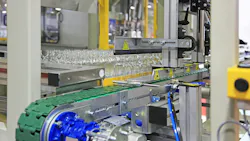
For years, manufacturers have selected linear actuation technologies based on the assumptions that hydraulic systems are best suited for high-force applications, while electromechanical screw-type actuators (EMAs) are utilized in low-force applications.
While traditionally that mindset may have worked, today’s production environments are demanding higher levels of reliability, precision, and uptime from linear actuation systems.
As faster cycle times, the need for compact machine designs, and increased demands for precision control become essential, many limitations of traditional actuation technologies are being exposed.
This has resulted in more OEMs, machine builders, and end users evaluating alternative actuation technologies for low-force applications.
Many Low-Force Applications Require High-Performance Actuators
A huge misconception in industrial automation is that low-force applications are fundamentally ‘simple.’ In reality, many lower force applications operate under challenging conditions.
Applications in packaging, material handling, food processing, automated assembly, robotics, and many others often require:
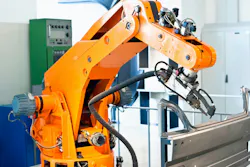
- high cycle rates
- continuous duty operation
- precise positioning and repeatability
- shock load tolerance
- compact machine footprints
- washdown or harsh operating conditions
- minimal maintenance requirements
- energy-efficient operation.
While these applications may require lower force output, performance demands placed on the actuator are still substantial. This is especially true as manufacturers continue to work towards advanced automation, predictive maintenance capabilities, and reduced downtime within their facilities.
Traditional Electromechanical Actuators Present Reliability Challenges
Screw-type electromechanical actuators have been widely used in low-force applications due to their utility and familiar design. While effective, this approach comes with inherent tradeoffs and challenges when exposed to industrial operating conditions.
Ball screw and roller screw EMAs depend on mechanical components (screws, nuts, bearings, belts) that require proper lubrication and maintenance/replacement schedules as they experience metal-to-metal contact. Over time, wear, contamination, shock loading, and side loading can contribute to unreliable performance and ultimately premature actuator failure.
Ingress Protection (IP) ratings are also a factor in certain environments. Many electromechanical actuator providers list their IP ratings as ‘static’, meaning that the rating only applies when the actuator is not moving. These EMAs may have a high IP rating while static, however maintaining high levels of ingress protection during continuous dynamic operation can be a challenge, especially in washdown or hazardous environments.
For manufacturers operating in food processing, packaging, forestry, mobile equipment, or even outdoor industrial applications, these environmental challenges become key consideration points during actuation technology selection.
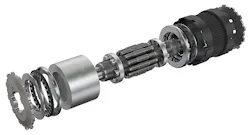
Hybrid Linear Actuation Offers Viable Option in Low-Force Applications
Hybrid linear actuators have traditionally been known for replacing hydraulic actuation systems, but in low-force applications, they also deliver the durability and reliability manufacturers struggle to achieve with traditional EMAs.
Hybrid linear actuators integrate the power of hydraulics with the precision of electric control in a compact, self-contained design.
Unlike traditional hydraulic systems that require a separate power unit, reservoirs, and several hose connections, the minimal fluid within the self-contained hybrid actuator circulates internally to generate force and precise motion, while remaining sealed for the life of the actuator.
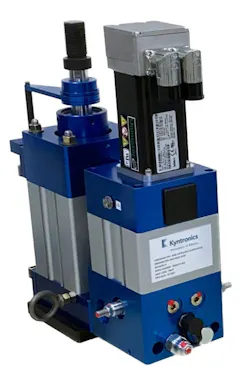
This design approach allows manufacturers to achieve:
- precise servo-controlled motion
- improved durability in demanding environments
- reduced maintenance and lubrication requirements
- programmable speed, position, and force control
- shock load tolerance
- energy-efficient power-on-demand operation
- reliable performance in continuous duty applications.
Together, these capabilities are helping expand the role of hybrid actuation across a growing range of low-force applications.
Applications Using Low-Force Hybrid Actuators
As manufacturers continue to evaluate alternatives to traditional actuation technologies for their low force applications, hybrid linear actuators are being deployed in a growing range of industries.
Packaging, Food Processing, Robotics, and Material Handling Systems
Equipment for packaging, food processing, robotics, and material handling operate at high cycle rates and require precise positioning, repeatability, and reliable continuous duty performance to keep up with automation demands.
Hybrid linear actuators offer servo-controlled precision, a compact design, and long-lasting durability, making them a low-maintenance solution for these types of applications.
Medical & Laboratory Equipment
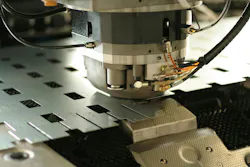
Low force pressing, packaging, die cutting and forming operations in medical and lab environments demand accuracy, consistency, and clean operation. In applications such as assembly pressing, thermo-welding, crimping, and forming, repeatability and safety are critical.
Unlike conventional hydraulic actuation systems, self-contained hybrid linear actuators eliminate long hose runs, exposed reservoirs, and open-loop designs that create multiple contamination and leak points that require ongoing maintenance.
Automated Clamping, Testing, Lifting, and Tooling Applications
Many low-force applications still experience shock-loading, repetitive cycling, and demanding duty cycles that are a challenge for electromechanical actuators.
These types of applications include clamping systems, testing equipment, lift tables, tooling systems, and positioning equipment all of which benefit from the durability and controllability of hybrid actuation systems.
Mobile and Compact Machine Designs
Machine builders are, now more than ever, placing greater emphasis on smaller footprints and compact equipment designs. Self-contained hybrid low force actuators are being evaluated in applications that demand robust performance and simplified integration.
Hybrid actuators only need electric power to operate, eliminating the need for separate hydraulic power units, reservoirs, and hoses.
Choosing the right actuator isn’t just about maximum force capacity. As manufacturers prioritize uptime, energy efficiency, predictive maintenance, and durability, correct actuation selection is essential. For many industries, low force performance is the key to efficiency, product quality, and lower operating costs.
This article was written and contributed by Carl Richter, VP & General Manager of Kyntronics.
About the Author
Carl Richter
Vice President and General Manager, Kyntronics
Carl Richter is the Vice President and General Manager at Kyntronics, a Cleveland-area (Solon, OH) manufacturing company specializing in advanced hybrid actuation solutions. With a background spanning both technical and business leadership, he drives innovation focused on energy efficiency, sustainability, and system-level performance. Richter is a published industry thought leader and frequent webinar contributor, with work featured in multiple industry publications on topics including electro-hydraulic efficiency and the transition toward electrified actuation systems.