Side Loading in Linear Actuators: A Hidden Cause of Premature Failure
Key Highlights
- Side loads are off-axis forces that introduce stress on internal components of linear actuators which can cause wear and premature failure.
- Common causes of side loading include load offsets and mounting configurations, leading to performance and reliability issues.
- Actuator selection and other design strategies such as use of external bearing supports can significantly reduce side load impacts.
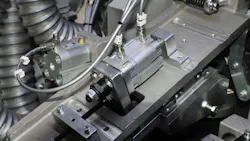
When specifying linear actuators for industrial and mobile applications, engineers focus heavily on performance parameters like force, speed, duty cycle, and stroke length. It is assumed that, as long as the actuation technology selected meets the technical specs of the application, the system will operate reliably.
However, linear actuator performance is not solely determined by force and speed alone. Linear actuators are designed to generate force along a single axis of motion, producing controlled linear movement in line with the direction of extension and retraction.
Performance issues arise when the actuator experiences forces that are not perfectly aligned with its axis of motion. These common off-axis forces, known as side loads, introduce stress on internal components like bearings, gears, screws, and seals. Those additional stresses can increase friction, reduce positioning accuracy, accelerate actuator wear, or lead to premature failure and downtime.
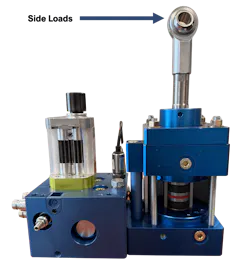
Side loading is not immediately visible during the actuator design phase, so it oftentimes goes unnoticed until reliability issues begin to present themselves in the field. Understanding how side loads develop and how they affect different actuation technologies is essential when determining the right actuator for a given application.
Why Side Loading Occurs
One of the most common causes of side loading is due to offset loading, where the applied force does not act directly along the center axis of the actuator piston. When a load is positioned above, below, or to the side of the actuator center axis, a bending moment is introduced during operation.
Actuator and rod mounting configurations also influence side loading. A face-mounted actuator minimizes the distance between mounting connections (actuator to rod), reducing the potential for side loading, while a clevis-to-clevis configuration represents the opposite extreme, increasing that distance and potentially amplifying off-axis forces.
How Side Loading Impacts Actuator Performance and Reliability
While side loading may not result in immediate failure, it introduces additional stress within the actuator over time, gradually degrading actuator reliability and lifespan. By altering how forces are distributed within the actuator, side loading disrupts normal load paths and places additional stress on the internal components. Over time, this can accelerate wear and degrade system performance.
In addition to long-term wear, side loading can also impact how effectively force is transmitted to the intended load. As internal friction in the actuator increases and the alignment is disrupted, the actuator requires more energy to achieve the desired target. In some cases, this can prevent the actuator from reaching the intended target altogether, resulting in the actuator stalling.
Screw-driven electromechanical actuators are particularly sensitive to side loading. Excessive side loads push the internal bearings and screw assembly out of alignment. This mechanical stress accelerates the wear of the screw/nut assembly, increases heat and stresses the bearings. Once the screw/nut assembly or bearings are compromised, the electromechanical actuator no longer functions reliably, oftentimes resulting in the need for a full actuator replacement.
Pneumatic cylinders, on the other hand, are able to tolerate minor side loads, but extended exposure will degrade pneumatic seals and bearings. When side loading occurs in pneumatic actuation systems, the rod seal may lose its integrity, resulting in replacement of the end cartridge.
Both hybrid linear actuators and traditional hydraulic actuators are more robust when it comes to side loading conditions. While side loading can still cause wear on rod or piston seals, these types of components are field replaceable. This allows the actuator to be restored to its full operation quickly.
Design Strategies to Minimize Side Loading
While side loading cannot be eliminated entirely, thoughtful system design can help minimize their impact on actuator performance and lifecycle. Ensuring precise alignment during design and installation is one of the most effective ways to improve overall reliability.
In many applications, especially those involving long strokes, the use of guided loads or external bearing supports are highly recommended. Guide rails and bearing supports help absorb lateral forces which, in turn, reduces the stress applied to the internal components. It is important to select actuation technology capable of handling expected lateral forces, as not all actuator technology types respond the same way to off-axis loading.
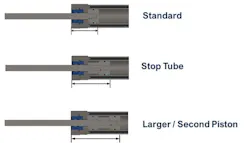
Hybrid and hydraulic actuation systems provide built-in design features that further minimize the effects of side loading:
- Multiple rod support bearings that distribute the force evenly across the rod.
- Stop tubes that extend the rod, allowing the piston to position deeper within the housing for greater stability.
- Longer or dual pistons to enhance guidance and reduce rod deflection under load.
If possible, it’s advised to engage with experienced application and design engineers who can help identify potential side loading issues early in the design process. Considering these factors in the beginning of actuator selection is more effective than mitigating side loading issues after installation.
Side loading is a common factor in many applications — its impact depends on the actuator technology and design. Understanding these differences allows you to choose an actuator that balances performance, maintainability, and long-term reliability.
This article was written and contributed by Carl Richter, VP & General Manager, Kyntronics.
About the Author
Carl Richter
Vice President and General Manager, Kyntronics
Carl Richter is the Vice President and General Manager at Kyntronics, a Cleveland-area (Solon, OH) manufacturing company specializing in advanced hybrid actuation solutions. With a background spanning both technical and business leadership, he drives innovation focused on energy efficiency, sustainability, and system-level performance. Richter is a published industry thought leader and frequent webinar contributor, with work featured in multiple industry publications on topics including electro-hydraulic efficiency and the transition toward electrified actuation systems.