Hydraulic Motion Control Still Critical to Industrial Automation
Key Highlights
- Delta Motion’s Jacob Paso offers his perspective on the continued importance of hydraulic motion control to industrial automation and trends he sees shaping the industry.
- Automation solutions that are easy to integrate and use as well as scalable to varied operational requirements are key features he sees customers requesting.
- How automation technologies are balancing high performance with flexibility, the rising interest in hybrid motion systems and methods for modernizing existing machines are among the themes he expects to see at Automate 2026.
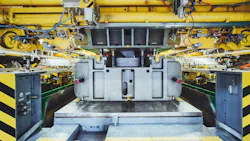
Hydraulics play an important role in many industrial applications, and continue to do so even as they become increasingly more automated. While all-electric solutions are a focus for some, there remain many applications for which hydraulics continue to be the better fit.
As Jacob Paso, President, Delta Motion explains in this Q&A, hydraulic motion control is especially well-suited for applications where large masses and high forces are involved.
Because hydraulics are still required in many industrial automation applications, he said Delta Motion is seeing increased demand for its motion controllers to replace those from other manufacturers that have become obsolete. This is helping customers more easily transition to automation while still enabling them to use the hydraulics technology required in their operations.
Ease of use is a key criteria for customers today to help them get up and running with their systems as quickly as possible. In addition, Paso said they are looking for automation solutions that can be scaled to support simple standalone machines as well as large multi-axis synchronized systems, ensuring the same technology can be employed as operations evolve.
In this Q&A with Power & Motion, Paso offers insight into other trends he sees within the industrial automation space as well as what he is looking forward to at Automate 2026 — a large robotics and automation event taking place June 22-25.
*Editors note: Questions and responses have been edited for clarity.
Power & Motion: What is the current state of the industrial automation market? Are people still investing in automation technologies?
Jacob Paso: Manufacturers are being more strategic with capital spending, while recognizing the need to invest in automation technologies, whether it is equipment manufacturers improving their product, all players working on improving security, or end-customers looking to upgrade old or obsolete equipment.
For example, Delta Motion has been seeing increased sales due to obsoleted controllers for hydraulic motion. Many of the big players aren’t investing in this area, choosing either to not replace these products, or not invest enough to generate a ‘Wow!’ experience with their customers. These customers, however, still need a solution, and are usually very excited about the improved control, ease-of-use and flexibility that they didn’t know was possible with hydraulics.
Power & Motion: Are there specific industries or applications where you are currently seeing more interest in automation solutions than others? If so, what are those industries or applications and why are they investing in automation?
Jacob Paso: The aerospace industry has been booming. Think of the AST SpaceMobile satellite that was recently lost (reportedly insured at $30 million), and their goal of launching hundreds of satellites. In a couple of years, they want to serve 5G to your existing phone, along with hundreds of millions of other customers. This huge market potential, coupled with deep pockets, high risk, and big rockets with massive forces, has pushed the need for testing across the aerospace industry.
Hydraulic motion control is especially well-suited to the large masses and high forces involved, and we are seeing nice growth from a broad base of customers. In this aerospace testing arena, particularly in the race to launch satellites, speed is critical, since delays can cost thousands of dollars per week in lost revenue. In these situations, product availability is key along with ease of integration.
The entertainment industry has discovered the ease-of-use and flexibility of Delta’s controllers. Special effects teams want to be able to adjust motion on the fly as creative requirements evolve during rehearsals or live productions. When a director wants the shot to look a certain way, it’s important to be able to make those changes in real-time.
In other industries, such as steel mills, sawmills, and precision presses, whether designing new machines or retrofitting existing machines, many of our customers are migrating from obsolete motion control products from Parker, Moog, and Rockwell Automation. [Our RMC motion controllers] connect directly to a wide variety of industrial sensors and integrate well with common PLCs including ControlLogix and Siemens. Delta Motion is known for great technical support, free firmware updates, and a practice of never obsoleting products, effectively addressing pain points for engineers charged with keeping machines running.
Power & Motion: Are hydraulics still used for industrial automation systems, or is there a greater use of electric actuation technologies in today’s systems? Or are both technologies used fairly equally?
Jacob Paso: Similar to the EV (electric vehicle) market, the emphasis has shifted from “electric at all costs” to “what is best for the particular use.” Hydraulics has the immutable physical advantage of fluid against metal rather than metal against a metal or other solid. Many high-performance and challenging applications are taking advantage of this benefit.
For example, hydraulic cylinders on press rolls are superior to electric in their ability to keep battery film thickness tolerances ultra-low, preventing thermal runaway in batteries (which can burn ships and parking garages, and require cars to be parked outside).
Applications with heavy loads and high speeds, or shock and vibration, or high-power density requirements, also heavily use hydraulics. Envision a 20-ft. (6.1 m) long 4x12 beam being positioned in a sawmill, or a large press applying hundreds of tons of force, and it quickly becomes clear why hydraulics still play such a major role in industrial automation.
And those Disney rides you have been on, with cars that hold a large group of people? Hydraulics gives a great ride and lasts for hundreds of thousands of visitors.
Hydraulics is also uniquely suited for precise force control, with benefits seen in material testing, friction welding, and all kinds of presses. We are also seeing growth in hybrid machines that combine both hydraulic and electric technologies. One example is large presses, where the pressing is done with hydraulics, while the loading/unloading may be a combination of electric and hydraulic motion. High speed industrial communication protocols such as EtherCAT play a key role in enabling these hybrid architectures by allowing hydraulic and electric motion to be tightly synchronized together.
Power & Motion: What are the features or capabilities customers are currently looking for in automation solutions?
Jacob Paso: Our customers are looking for performance, ease-of-use, connectivity, and support. Smoother motion improves part quality, reduces maintenance and extends machine life. Better control improves efficiency via less wasted motion. Customers want solutions that simplify integration and reduce engineering time, especially when working within existing PLC architectures or modernizing legacy equipment. They want EtherCAT, EtherNet/IP, and PROFINET communications.
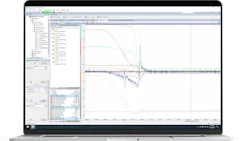
They want advanced diagnostics and motion system visibility. Software platforms like Delta Motion’s RMCTools allow engineers to configure, tune, troubleshoot, and analyze machine performance from a single environment. Built-in plotting and tuning tools help users quickly visualize and optimize motion, significantly reducing troubleshooting and commissioning time.
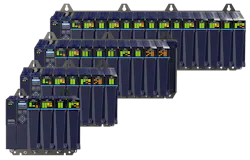
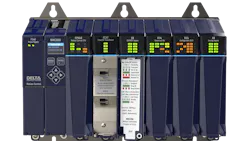
There is increasing demand for scalable solutions that can support anything from simple standalone machines to large multi-axis synchronized systems. Delta Motion RMCs offer from one to 50 axes of tightly synchronized control, handling smaller standalone applications up to highly synchronized multi-axis systems while maintaining a common software environment and consistent user experience.
Long-term product availability, responsive technical support, and no-cost software and firmware updates continue to resonate strongly with customers.
Power & Motion: What challenges still exist when developing automation solutions, or related to uptake of automation solutions? What could help overcome these challenges?
Jacob Paso: A current challenge is security requirements for products with digital elements, which encompasses most automation products. Most recently, this has been driven by the European Union, but we can see that it will, and must, spread worldwide. While some of these requirements lead to expensive investments, various control and communication companies are working on providing security offerings that can be easily incorporated into products.
Companies are struggling to find engineers and technicians with hands-on experience. People are retiring faster than they can be replaced, leaving smaller engineering teams responsible for increasingly complex systems. This has increased demand for automation solutions that are easier to configure, easier to diagnose, and supported by responsive technical support and intuitive software tools.
Companies cannot afford to shut down production for weeks or months while completely redesigning a machine or replacing an entire production line, necessitating a phased modernization approach.
To help overcome these challenges, the industry needs solutions that are flexible and easy to integrate. And when companies know they have access to responsive support and long-term product availability, they are far more confident investing in modernization projects.

Power & Motion: What trends or technologies are you most looking forward to seeing at Automate 2026? Are there any new trends entering the market you expect to see showcased?
Jacob Paso: At Automate 2026, we’re particularly looking forward to seeing how industry is taking advantage of the benefits of hydraulic motion control. With the push to do more manufacturing in the U.S., there will be more need for machines that deal with heavy loads and high forces, while operating in rugged environments. We expect to see more use of EtherCAT connected with industrial hydraulic motion control.
Another trend we anticipate is easier retrofitting of legacy hydraulic systems with advanced motion controllers, extending the life of existing machinery. As sustainability goals evolve, we’ll also be looking for innovations that make hydraulic systems more energy efficient, ensuring they stay competitive alongside electric solutions in terms of total energy per unit of production.
Power & Motion: What do you think will be some of the biggest themes and/or takeaways from this year’s show?
Jacob Paso: I think a major theme will be how to balance high performance with flexibility. Whether it’s hydraulic, electric, or hybrid motion systems, companies will want solutions that can adapt quickly to changing production demands and operating conditions. We are also seeing growing interest in hybrid systems that combine the strengths of both hydraulic and electric technologies to maximize efficiency, precision, and force output within the same machine.
I also expect a big takeaway to be the value of modernizing existing equipment with new motion controllers to help businesses meet both current and future challenges without requiring full system replacements. Lastly, I think there will continue to be a strong focus on interoperability and open integration, ensuring that motion control systems can communicate seamlessly with broader automation, networking, and plant level data systems.
About the Author
 Sara Jensen
Sara Jensen
Executive Editor, Power & Motion
Sara Jensen is executive editor of Power & Motion, directing expanded coverage into the modern fluid power space, as well as mechatronic and smart technologies. She has over 15 years of publishing experience. Prior to Power & Motion she spent 11 years with a trade publication for engineers of heavy-duty equipment, the last 3 of which were as the editor and brand lead. Over the course of her time in the B2B industry, Sara has gained an extensive knowledge of various heavy-duty equipment industries — including construction, agriculture, mining and on-road trucks —along with the systems and market trends which impact them such as fluid power and electronic motion control technologies.
You can follow Sara and Power & Motion via the following social media handles:
X (formerly Twitter): @TechnlgyEditor and @PowerMotionTech
LinkedIn: @SaraJensen and @Power&Motion
Facebook: @PowerMotionTech