Freudenberg Adapts Automotive Hydraulic Accumulators for Agricultural Machinery
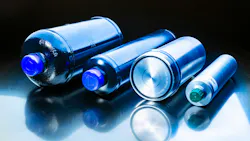
Freudenberg Sealing Technologies recently adapted its piston accumulator developed for passenger car transmissions for use in agricultural equipment.
The project was prompted by an agricultural machinery manufacturer which was experiencing quality and service-life challenges with the diaphragm accumulators typically used in its machines.
What is a Hydraulic Accumulator?
Hydraulic accumulators are pressure vessels that can be used in a hydraulic system to perform various tasks including:
- maintain pressure,
- store and recapture energy,
- reduce pressure peaks,
- power chassis suspension, and
- dampen shock, vibration and pulsations.
Read the following articles to learn more about hydraulic accumulators:
What are Hydraulic Accumulators?
Agricultural machinery often works in harsh operating conditions, placing a lot of demand on accumulators and other hydraulic system components. Factors such as high ambient temperatures, high humidity and continuous operation over long periods can put significant strain on these components, leading to early wear.
And because the diaphragm accumulators are deeply integrated into the machine’s transmission and can only be accessed with considerable maintenance effort, repairs or replacements can be challenging.
Seeing similarities in operating conditions and performance needs as the automotive applications it serves, Freudenberg Sealing Technologies (Freudenberg) recommended using its in-house designed piston accumulator. The accumulator has a robust design as well as high resistance to temperature and pressure fluctuations, all of which benefit its use in agricultural machinery applications.
Piston Accumulators Offer Performance Advantages for Agricultural Machinery
There are several advantages piston accumulators offer over diaphragm versions which make them a good option for agricultural machinery applications.
Jens Wolfram, Global Segment Director, Mobile Machinery Agriculture, Freudenberg Sealing Technologies, explained to Power & Motion that diaphragm accumulators separate oil and gas by means of an elastomer diaphragm, typically mounted inside a spherical steel housing.
“Piston accumulators, by contrast, use a metallic piston that moves within a cylindrical body to keep the two media apart,” he said. “Since a rubber diaphragm allows more gas diffusion over time than a metal piston, piston accumulators generally achieve longer service intervals.”
He went on to say that piston accumulators are considered a good fit for agricultural machinery because they tolerate higher temperatures and typically require less frequent servicing.
“In addition, their design supports a higher load ratio: the piston can travel to either end stop of the cylinder, whereas diaphragm designs must be operated within limits to prevent the diaphragm from striking the upper or lower housing under unfavorable pressure differences,” he said.

Wolfram said Freudenberg’s sealing expertise is applied to the piston accumulator as well, adding further performance benefits. “[We use] a specially developed, low-friction sealing concept (SIMKO), engineered to minimize leakage and support reliable separation of the gas and hydraulic media,” he said.
“A further design advantage is serviceability: screw-type variants [of the accumulator] can be dismantled, allowing seals to be replaced,” he said. “In many use cases, the accumulator’s expected lifespan can exceed that of the host machine, enabling ‘lifetime’ installation in hard-to-access locations.”
The piston accumulators Freudenberg provided to the agricultural equipment manufacturer have a volume of 0.75 L and a compact design, enabling direct installation on the transmission.
Freudenberg performed extensive testing of its hydraulic accumulator technology to ensure it would perform as desired in the manufacturer’s agricultural machinery. Per the company, its accumulator achieved a service life three to four times longer than that of the diaphragm accumulator previously used.
Initially, the accumulator was tested to be a replacement option, but because of the performance it was able to achieve it is now supplied in series production.
Because Freudenberg was able to adapt an already proven technology to a new application, development time was reduced, helping speed up time to market for the customer.
Other machinery applications are now being looked at as well in which the piston accumulator can potentially be used.
“The company sees piston accumulators as a suitable option for other applications that demand high robustness and long maintenance-free operation, including wind turbines and construction machinery,” said Wolfram.
About the Author
 Sara Jensen
Sara Jensen
Executive Editor, Power & Motion
Sara Jensen is executive editor of Power & Motion, directing expanded coverage into the modern fluid power space, as well as mechatronic and smart technologies. She has over 15 years of publishing experience. Prior to Power & Motion she spent 11 years with a trade publication for engineers of heavy-duty equipment, the last 3 of which were as the editor and brand lead. Over the course of her time in the B2B industry, Sara has gained an extensive knowledge of various heavy-duty equipment industries — including construction, agriculture, mining and on-road trucks —along with the systems and market trends which impact them such as fluid power and electronic motion control technologies.
You can follow Sara and Power & Motion via the following social media handles:
X (formerly Twitter): @TechnlgyEditor and @PowerMotionTech
LinkedIn: @SaraJensen and @Power&Motion
Facebook: @PowerMotionTech