Mastering Machine Uptime: Strategies for Achieving Reliability and Efficiency
Key Highlights
- Efforts to improve machine uptime and availability can play an important role in preventing unplanned downtime which can impede productivity and increase operational costs.
- There are several steps a manufacturing or other production environment can follow to improve machine uptime including use of predictive maintenance tools and selecting components based on reliability features.
- Long-term benefits, such as reduced costs and greater customer satisfaction, can be achieved when employing tactics to improve machine uptime.

In any production environment, machine efficiency and productivity directly determine operational success. When equipment is available and functioning as it should, output rises or remains on par, costs stay within budget, and customers get the consistent results that will keep them coming back for more.
But when those machines are down, conditions are primed for disruption as output becomes unpredictable or stops altogether. Costs can escalate rapidly, and customer confidence may waver, creating opportunities for competitors to move in.
Achieving high uptime rates and availability isn’t as simple as keeping machines running. It requires a concentrated approach that marries engineering insight, maintenance discipline, and a deep understanding of the importance of reliability.
For engineers, designers, and technicians, mastering uptime means more than reacting to breakdowns. It means being proactive: anticipating issues before they occur, analyzing failures to prevent repeat problems, and designing systems that can withstand demanding use.
Why Uptime and Availability Matter
Uptime is generally expressed as the percentage of time a machine is operational during its total available time. High uptime reflects strong reliability and efficiency, while low uptime signals hidden costs in the form of lost output and repair expenses. Availability, on the other hand, measures the machine’s readiness for use when needed. Both metrics serve as key indicators of performance, shaping not only productivity but also customer confidence.
When uptime and availability drop, the consequences can ripple throughout an organization. Production schedules slip, customer deliveries are impacted, and maintenance costs climb. Conversely, consistent availability reassures clients that products will arrive on time and meet quality expectations.
Several factors directly influence whether machines are able to meet uptime and availability requirements:
- the design and durability of components
- the quality and timing of maintenance work
- operator skill and adherence to procedures
- environmental conditions such as temperature, dust, or vibration
Each of these can either sustain reliability or compromise it. Engineers and technicians who understand how these influences interact are better positioned to implement strategies that prevent downtime before it disrupts operations.
Practical Steps Toward Mastering Machine Availability and Uptime
For engineers, designers, and technicians seeking to master uptime and availability, several practical steps can make an immediate impact:
- Establish clear baseline metrics for uptime, availability, mean time between failures (MTBF) and mean time to repair (MTTR).
- Introduce predictive maintenance where possible, starting with critical assets.
- Apply root cause analysis consistently to eliminate recurring problems.
- Prioritize component reliability during design and replacement decisions.
- Foster open communication between operators, maintenance teams, and engineers.
By following these steps, organizations not only reduce downtime but also build resilience into their operations.
The Role of Data and Metrics
Measuring uptime and availability provides the baseline for improvement. Without accurate data, organizations operate in the dark, unable to pinpoint weak spots or track progress.
Key performance indicators such as MTBF, the average interval between failures, and MTTR, the average duration to fix issues, are commonly used. These tracking metrics can offer insight into when maintenance issues may occur and how long it will take to fix them so machine owners can plan downtime to address issues before they lead to larger problems.
The availability of advanced monitoring systems now allows for real-time dashboards to be used, where operators and managers can view performance at a glance, making it even easier to track machine performance. This transparency fosters accountability and encourages proactive problem-solving across teams.
Predictive Maintenance Provides a More Proactive Approach
One of the most powerful tools for extending machine uptime is predictive maintenance. Unlike reactive methods, where repairs follow a breakdown, predictive maintenance uses data and sensors to monitor equipment health in real time. By analyzing vibration, temperature, lubrication levels, or other indicators, technicians can identify early signs of wear and intervene before a failure occurs.
Adopting predictive maintenance services provides a structured framework for companies looking to maximize reliability. These services often integrate machine learning algorithms and historical performance data, allowing maintenance teams to schedule interventions at the optimal time. The result is fewer unexpected stoppages, more efficient use of labor, and extended equipment life cycles.
Examples of technologies that can be used for implementing predictive maintenance include Internet of Things (IoT) sensors which can be used to detect vibration levels, temperature fluctuations, as well as both noise levels and noise anomalies.
Changes in vibration patterns, high-frequency sounds that are undetectable to humans, and overheating can all be indicators of machine performance issues. Therefore, having the ability to detect these aspects early on with sensors makes it possible to address them before serious issues have a chance to develop.
Machine learning software and artificial intelligence (AI) are rapidly becoming more advanced and more widely available. As such, their use in predictive maintenance systems is increasing to help identify vulnerabilities and predict failures.
More traditional means of predictive maintenance remain highly valuable as well, such as data analytics software, which takes existing sensor data and uses it to recognize trends, convert it to visual graphics for human inspection, and pinpoints areas that need maintenance or alteration.
Anyone hesitating to implement predictive maintenance tech can look no further than a Fortune 500 company for a great example of how much money this approach can save businesses. This company was experiencing bearing failures at a rate that was causing it to hemorrhage money. After some research, it pivoted from condition-based alerts to predictive maintenance by employing IoT vibration sensors, a predictive analytics platform, as well as other solutions. MTBF jumped from an estimated 500 hours to 2,500 hours, roughly saving the company $1.6 million per year.
Learn More About Predictive Maintenance and the Various Technologies Involved
Predictive Maintenance Systems Enable Better Machine Monitoring
Preventative and Predictive Maintenance in Fluid Power: The Technologies and Benefits
Perform Root Cause Analysis to Achieve Lasting Solutions
When failures do occur, the temptation is to replace the faulty part and move on. Without understanding the underlying cause, however, the problem often returns. Root cause analysis (RCA) helps engineers dig deeper, identifying not only what failed but why.
For example, a motor might overheat repeatedly. RCA could reveal that the problem isn’t the motor itself, but inadequate ventilation in its housing. Addressing the ventilation issue ensures the repair lasts, preventing repeated downtime and wasted resources.
By institutionalizing RCA, organizations shift from quick fixes to sustainable solutions. Over time, this mindset transforms maintenance practices, improving reliability and reducing costs.

The Importance of Component Reliability and Design Choices
Every machine is only as strong as its weakest component. Designers and engineers must therefore account for machine reliability at the component level by considering factors such as wear rates, load capacities, and expected lifespans when determining which components to use — both in the initial machine design phase as well as when replacing parts.
Selecting higher-grade materials or incorporating redundancy into designs are some of the ways availability can be dramatically improved during the design phase.
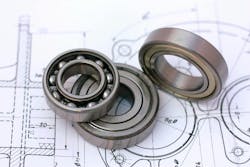
Technicians also play a role by ensuring parts are installed correctly and maintained to specification. Even the most robust component will fail prematurely if misaligned, improperly lubricated, or subjected to loads outside its intended range. Training and attention to detail are therefore just as critical as design decisions.
Open Communication Builds a Culture of Reliability
Technical strategies alone cannot guarantee maximum uptime. Organizations that excel in this area foster a culture of open communication among all personnel, making reliability everyone’s responsibility:
- Operators are encouraged to report unusual sounds or behaviors promptly.
- Maintenance teams are given resources and training to apply best practices.
- Engineers incorporate lessons learned from past failures into new designs.
This culture reduces the blame game often associated with downtime and replaces it with a collective effort to sustain performance. The result is an environment where continuous improvement becomes second nature.
Improving Uptime and Availability can Lead to Long-Term Payoffs
Improving uptime isn’t solely a technical challenge; it’s also a financial one. Investments in sensors, higher-quality components, or predictive maintenance technologies must be weighed against expected gains in productivity and reduced downtime. Engineers and managers must collaborate to identify the tipping point where added reliability delivers the best return on investment.
For example, spending more on premium bearings might seem costly upfront, but if they double the interval between replacements, the long-term savings in labor and downtime can be substantial.
The payoff of such investments for many organizations is clear: doing so can lead to stronger financial performance, reduced stress on employees, and a competitive edge in the marketplace. With predictive maintenance services, data-driven insights, and a culture focused on reliability, engineers and technicians can transform improving machine performance from a daily challenge into a lasting advantage.
This article was written and contributed by Chris DeBrew, Director of Reliability 360® at Advanced Technology Services.
About the Author
Chris DeBrew
Director of Reliability 360, Advanced Technology Services
Chris DeBrew is the Director of Reliability 360® at Advanced Technology Services and is responsible for leading and executing reliability-centered initiatives, ensuring optimal machine health and operational efficiency.